

NASCAR’s new GPS tracker rule is set to change the game starting in 2025, and fans are buzzing with questions. What does this mean for drivers, teams, and race strategies? The rule promises to bring new insights into every race, but there’s more to it than just tracking cars. NASCAR is keeping some details under wraps, and the racing world is eagerly waiting to see how it will impact the competition.
Key Highlights
- GPS trackers are required in all NASCAR Cup Series cars starting February 12, 2025.
- The GPS tracking system is designed to enhance race monitoring and data accuracy.
- Installation of an IDAS GPS antenna on the right rear window is mandatory for compliance.
- The system allows centralized data management by NASCAR for integrity and security.
- This technological upgrade is expected to revolutionize team strategies and decision-making.
NASCAR’s History of Revolutionary Changes
Throughout its storied history, NASCAR has consistently welcomed revolutionary changes to improve the sport’s competitiveness and appeal. Each season, the organization introduces innovations that redefine the racing landscape. In 2022, NASCAR revealed a notable alteration with the debut of the Next-Gen car in the NASCAR Cup Series. This development marked a substantial shift from the era when drivers and teams had greater autonomy over the mechanics of their vehicles. The change to single-source, standardized cars has altered the dynamics on both short tracks and superspeedways, offering a new set of challenges and opportunities for drivers and teams similarly.
Historically, NASCAR has been no stranger to radical adaptations, often embracing advancements to improve both the spectacle and the safety of the sport. The introduction of the Car of Tomorrow in 2007, with its emphasis on driver protection, and the implementation of the Gen-6 car in 2013, with its focus on improved aerodynamics and performance, are evidence of NASCAR’s commitment to progression. Such changes are designed to level the playing field, ensuring that races are decided more by driver skill and strategy than by mechanical advantages.
Even seasoned champions like Jimmie Johnson have faced challenges adapting to these changes, as seen in his struggle to secure a top-25 finish in 12 races with the Next-Gen car. This highlights the groundbreaking impact of NASCAR’s innovations, which continuously push the boundaries of the sport.
As NASCAR looks to the future, these historical shifts lay the groundwork for further advancements, such as the upcoming GPS tracker rule set to debut in 2025.
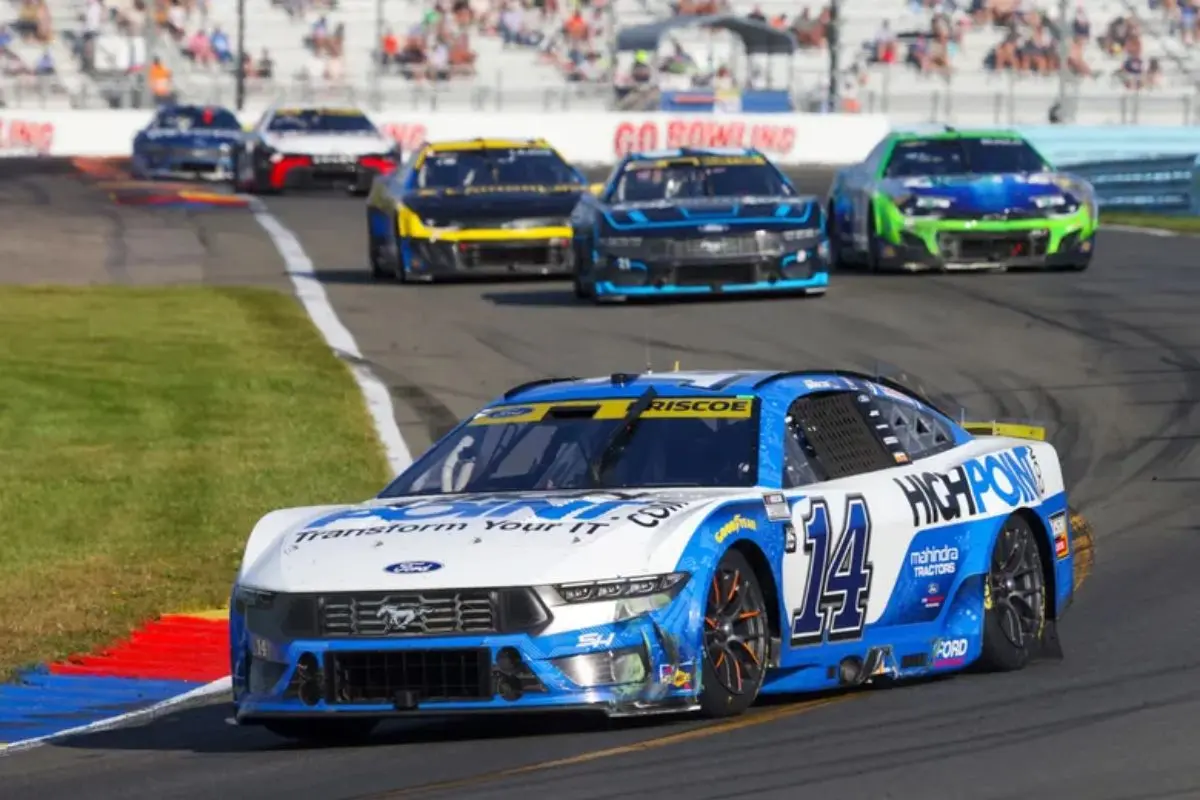
NASCAR Responds to Allegations with Technological Innovation
Building upon its tradition of embracing innovation, NASCAR is now addressing recent controversies with a new technological approach. In response to the heavy allegations in 2024 regarding inconsistent race decisions, NASCAR has taken decisive action to improve the fairness and transparency of race inspections. The integration of cutting-edge technology is designed to guarantee consistent and accurate evaluations of race data, thereby safeguarding the integrity of the sport.
The new technological innovation focuses on refining the inspection of race data, a critical component that influences the outcomes for drivers. NASCAR’s commitment to technological advancement is evident in its methodical approach to addressing these allegations:
- Improved Accuracy: By leveraging advanced technology, NASCAR aims to enhance the precision of data collection during races, guaranteeing that all decisions are based on the most reliable information available.
- Consistency in Decision-Making: The new system is designed to standardize the process of race data evaluation, reducing the potential for subjective interpretation and promoting uniformity in race decisions.
- Transparency: With the implementation of this technological setup, NASCAR intends to provide greater transparency to teams and fans as well, offering insights into how decisions are made and fostering trust in the process.
- Real-Time Data Analysis: The innovation allows for instantaneous data processing, enabling officials to make informed decisions quickly, thereby improving the general efficiency of the race inspection process.
New GPS Tracker Requirement for NASCAR Cup Series Cars
In a remarkable move towards improving race oversight and data accuracy, NASCAR has mandated the installation of GPS trackers in all NASCAR Cup Series cars starting in 2025. This decision introduces a notable technological advancement aimed at increasing the precision of race data collection and monitoring. The GPS tracking system, as reported by NASCAR journalist Jerry Jordan, will require teams to install a GPS antenna on their cars. Specifically, the rule mandates the placement of an IDAS GPS antenna on the right rear window of each car, effective February 12, 2025.
“New Rule:@NASCAR will require teams to install a GPS antenna on their cars in 2025. “Effective February 12, 2025, each vehicle must have an IDAS GPS antenna installed in the right rear window as illustrated in the following image:” – Jerry Jordan
New Rule: @NASCAR will require teams to install a GPS antenna on their cars in 2025.
"Effective February 12, 2025, each vehicle must have an IDAS GPS antenna installed in the right rear window as illustrated in the following image:" pic.twitter.com/eIVzLxdsCi— Jerry Jordan (@JerryJordan_KTT) January 15, 2025
The implementation of these trackers is expected to provide NASCAR with a more thorough view of each race’s dynamics. By capturing precise location data, NASCAR improves its ability to monitor compliance with race regulations and guarantees a fair competition environment. The collected data will be exclusively managed by NASCAR, who will control its usage and dissemination. This centralized data governance highlights NASCAR’s commitment to maintaining the integrity and security of race information.
This new requirement reflects NASCAR’s ongoing dedication to utilizing technology for improved race management. By incorporating GPS technology, NASCAR aims to strengthen its oversight capabilities, offering a more detailed analysis of car performances and track conditions.
The move is part of a broader plan to modernize the sport, aligning with emerging technological trends while addressing the demands for greater transparency and accuracy. NASCAR’s tactical adoption of GPS tracking technology emphasizes its proactive approach to improving the sport’s operational standards and guaranteeing a level playing field for all competitors.
 JR Motorsports Appoints New Crew Chief” width=”1200″ height=”800″ srcset=”https://slicksandsticks.com/wp-content/uploads/2024/12/Andrew-Overstreet-Takes-on-Full-Time-Crew-Chief-Role.webp 1200w, https://slicksandsticks.com/wp-content/uploads/2024/12/Andrew-Overstreet-Takes-on-Full-Time-Crew-Chief-Role-300×200.webp 300w, https://slicksandsticks.com/wp-content/uploads/2024/12/Andrew-Overstreet-Takes-on-Full-Time-Crew-Chief-Role-1024×683.webp 1024w, https://slicksandsticks.com/wp-content/uploads/2024/12/Andrew-Overstreet-Takes-on-Full-Time-Crew-Chief-Role-768×512.webp 768w, https://slicksandsticks.com/wp-content/uploads/2024/12/Andrew-Overstreet-Takes-on-Full-Time-Crew-Chief-Role-630×420.webp 630w, https://slicksandsticks.com/wp-content/uploads/2024/12/Andrew-Overstreet-Takes-on-Full-Time-Crew-Chief-Role-150×100.webp 150w, https://slicksandsticks.com/wp-content/uploads/2024/12/Andrew-Overstreet-Takes-on-Full-Time-Crew-Chief-Role-696×464.webp 696w, https://slicksandsticks.com/wp-content/uploads/2024/12/Andrew-Overstreet-Takes-on-Full-Time-Crew-Chief-Role-1068×712.webp 1068w” sizes=”auto, (max-width: 1200px) 100vw, 1200px” />
NASCAR’s Long-Standing Data Collection Efforts
NASCAR’s decision to mandate GPS trackers in Cup Series cars highlights a broader commitment to refining data collection processes that have evolved over decades. This evolution reflects NASCAR‘s dedication to improving oversight and guaranteeing more stringent control over racing conditions.
Historically, NASCAR relied heavily on photographs and human observation to monitor races. However, as technology advanced, so did the methods for data collection. The introduction of live data systems marked a notable leap forward, providing real-time insights that transformed how races are managed.
Over the years, NASCAR has implemented several strategies to improve data collection and oversight:
- Photographic Analysis: Initially, NASCAR used photographs to capture essential moments, a method that required manual analysis and interpretation.
- Human Observers: Track officials played a vital role in monitoring races, relying on their judgment to make decisions—a process that, while informed, lacked precision.
- Live Data Integration: The shift to live data allowed for a more dynamic approach, offering immediate feedback on vehicle performance and race dynamics.
- Regulation Tweaks: Besides data advancements, NASCAR has also adjusted regulations, such as limiting Cup teams to four cars, to maintain competitive balance.
The upcoming GPS tracker requirement is not just a technological upgrade; it represents an ongoing commitment to meticulous data management. This new rule aligns with NASCAR’s goal of leveraging advanced technology to guarantee fairness and safety in racing.
Microsoft Partnership and the Future of NASCAR Data
Although technology has always played a vital role in NASCAR, the tactical partnership with Microsoft in 2016 marked a remarkable transformation in how the sport utilizes data. This collaboration introduced the ‘Race Management’ app, a tool that revolutionized NASCAR’s ability to monitor live car data, including RPM, braking, throttling, speed, and lap times. By leveraging Microsoft’s technological expertise, NASCAR was able to improve its data monitoring and storage capabilities considerably.
An important aspect of this partnership was the adoption of Microsoft Azure for data storage, positioning NASCAR to manage one of the most substantial data footprints in sports. With each race car equipped with multiple sensors, computers, and cameras, the volume of data generated is immense.
Anthony Morgante, a former Microsoft director for sports partnerships, emphasized that the integration of these technologies laid the groundwork for further advancements.
“NASCAR is one of the sports that probably generates the most data, just because of the nature of the sport – the cars have a bunch of sensors in them, there’s computers on the car, camera technology aids with other metrics.”
Looking ahead, NASCAR’s acceptance of cutting-edge technology continues with the introduction of GPS tracking systems in 2025. This innovation, built upon the foundation established by the Microsoft partnership, promises to boost the precision of data collection and analysis.
GPS trackers will provide real-time insights into car movement and performance, offering a new dimension of data that teams can use to optimize strategies and improve competitiveness.

News in Brief: NASCAR’s New GPS Tracker Rule
The introduction of GPS trackers in NASCAR’s Cup Series, starting in 2025, marks a notable advancement in the sport’s technological landscape. This initiative reflects NASCAR’s ongoing commitment to innovation and data-driven improvements. The partnership with Microsoft will further improve data collection capabilities, fostering increased accuracy in performance analysis.
By embracing these changes, NASCAR aims to address past allegations and set new standards for transparency and efficiency, ensuring a progressive future for the sport and its stakeholders.
ALSO READ: JR Motorsports Achieves NASCAR Cup Series Dream Due to Rick Hendrick’s Expert Guidance

