
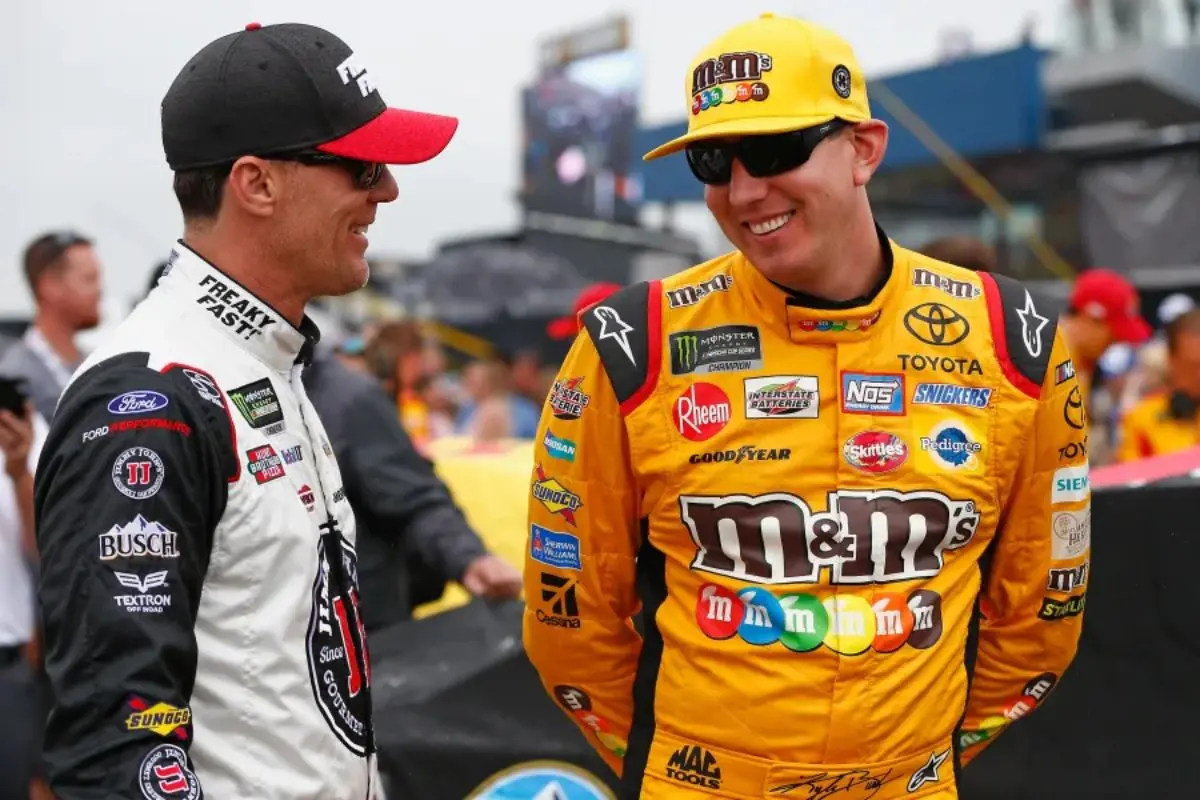
Kevin Harvick explains Kyle Busch‘s misunderstanding of the rulebook after a tough night at Daytona International Speedway. Kyle Busch believed he could continue racing, but officials saw it differently. A rule many thought was clear turned into a major talking point, leaving teams questioning its application. The decision ended Kyle Busch’s shot at victory, leading to frustration and debate. As fans and teams looked for answers, Kevin Harvick stepped in to break down what really happened and why the rule played out this way.
Key Highlights
- Kevin Harvick explains how NASCAR’s DVP limits repair time to seven minutes for damaged vehicles.
- Harvick highlights the requirement for cars to meet minimum speed over three green-flag laps post-repair.
- He points out Busch’s disqualification resulted from failing to reach the mandatory speed after repairs.
- Harvick notes misunderstandings by teams often lead to issues with DVP compliance.
- The DVP aims to ensure safety and competitive fairness despite its complexity causing driver frustration.
Kyle Busch’s Daytona 500 Hopes Crushed
In a dramatic turn of events at the Daytona 500, Kyle Busch‘s aspirations were abruptly shattered, leaving both fans and commentators reeling from the unexpected outcome.
After two decades of anticipation, Busch’s quest for the coveted Daytona 500 trophy was thwarted when NASCAR officials parked his vehicle, citing the updated Damaged Vehicle Policy (DVP). This policy, designed to guarantee safety and maintain race integrity, became the focal point of controversy as Busch expressed his disdain, questioning the officials’ grasp of their own guidelines.
Despite his frustration, the decision was grounded in the rulebook, intended to prevent compromised vehicles from posing risks on the track.
 Fr8 208 Full Entry List” width=”1200″ height=”800″ srcset=”https://slicksandsticks.com/wp-content/uploads/2025/02/Fr8-208-Full-Entry-List.webp 1200w, https://slicksandsticks.com/wp-content/uploads/2025/02/Fr8-208-Full-Entry-List-300×200.webp 300w, https://slicksandsticks.com/wp-content/uploads/2025/02/Fr8-208-Full-Entry-List-1024×683.webp 1024w, https://slicksandsticks.com/wp-content/uploads/2025/02/Fr8-208-Full-Entry-List-768×512.webp 768w, https://slicksandsticks.com/wp-content/uploads/2025/02/Fr8-208-Full-Entry-List-630×420.webp 630w, https://slicksandsticks.com/wp-content/uploads/2025/02/Fr8-208-Full-Entry-List-150×100.webp 150w, https://slicksandsticks.com/wp-content/uploads/2025/02/Fr8-208-Full-Entry-List-696×464.webp 696w, https://slicksandsticks.com/wp-content/uploads/2025/02/Fr8-208-Full-Entry-List-1068×712.webp 1068w” sizes=”auto, (max-width: 1200px) 100vw, 1200px” />
The disqualification, though difficult for Busch, highlighted the stringent enforcement of regulations that govern this sport. As the dust settled, the racing community found itself embroiled in a debate over the policy’s implementation, with NASCAR veteran Kevin Harvick poised to provide further clarity on its rationale.
“With the new DVP policy—the damaged vehicle policy—there are some new rules regarding what happens when a car has flat tires or is involved in an accident. Once they got back, there were some technicalities with the rule. They sent the car back out on the track, but then brought it back into the garage. Technically, once a car is towed back to the designated area, it can be repaired, but when it leaves the garage, it has to meet minimum speed. If it doesn’t, it can’t come back.” – Kevin Harvick
The Lap 186 Wreck That Changed Everything
The unfolding events of the Daytona 500 took a dramatic turn on the 186th lap, marking a pivotal moment in the race’s narrative.
Kyle Busch, running prominently near the front, found his fortunes reversed by an aggressive maneuver from Joey Logano. This maneuver set off a chain reaction, resulting in a multi-car wreck that left Busch’s No. 8 Richard Childress Racing Chevrolet damaged.
Despite the visible damage, the team assessed the car as still capable of rejoining the fray, hinging on the nuances of NASCAR’s updated Damaged Vehicle Policy (DVP).
Under these rules, teams are permitted unlimited time to work on cars in the garage, provided they initially achieve minimum track speed.
Yet, as Kevin Harvick clarified, the team grappled with the rule’s intricacies. Missteps in procedure led to a situation where the car, having been towed and repaired, failed to meet mandatory speed, ultimately forcing its withdrawal.
“They never went to a green flag, but they did bring the car back in to work on it, which technically isn’t allowed. It’ll be interesting to see if that rule sticks or if the team misinterpreted it, because that could be something that evolves moving forward.” – Kevin Harvick

NASCAR’s Updated DVP Rules and Their Impact on Busch
How does one navigate the labyrinth of NASCAR’s updated Damaged Vehicle Policy (DVP) without encountering procedural pitfalls?
The DVP outlines that if a car cannot drive away from an incident, it must be towed to the garage for repairs. Teams are granted one opportunity to repair the vehicle, which must then achieve minimum speed across three consecutive green-flag laps. Failure to meet this criterion results in disqualification.
Kyle Busch found himself ensnared in this intricate web at Daytona. His car, after being towed and assessed, seemed ready to rejoin the fray.
Yet, NASCAR officials required supplemental repairs under caution, preventing him from meeting the speed requirement before returning to the garage. This led to his exclusion from the contest, culminating in a frustrating P34 finish.
Busch expressed discontent, lamenting the procedural nuances that deprived him of a fighting chance, underscoring the critical impact of DVP rules.
“We got beat by NASCAR procedures again.” – Kyle Busch
NASCAR’s Response to the Controversy
Addressing the controversy surrounding the Damaged Vehicle Policy (DVP) at NASCAR, officials have taken a firm stance, attributing the uproar to a misunderstanding by Kyle Busch and his team.
Elton Sawyer, NASCAR’s senior vice president of competition, clarified that the existing DVP rules have not changed markedly, aside from granting an extra minute for repairs, now totaling seven minutes.
“I think it was a misunderstanding on Kyle’s perspective. What we do on pit road as far as the damaged vehicle policy hasn’t changed from 2024 other than we’re giving an additional minute — it’s now seven minutes versus six. But as far as what our fans, and our competitors, what they witnessed last year in the past five or six years, the DVP policy looks the same on pit road with the adjustments that I mentioned.” – Elton Sawyer
Sawyer emphasized that this adjustment is the sole alteration, maintaining consistency in the rules observed over the past several years.
Despite the backlash from Busch and the Richard Childress Racing team, Sawyer indicated that the procedures remain robust, suggesting that the team’s frustrations stem from a misinterpretation rather than any fault in the rules themselves.
The incident has raised questions about whether further clarifications or modifications to the policy might be necessary, though NASCAR remains firm in its current stance.
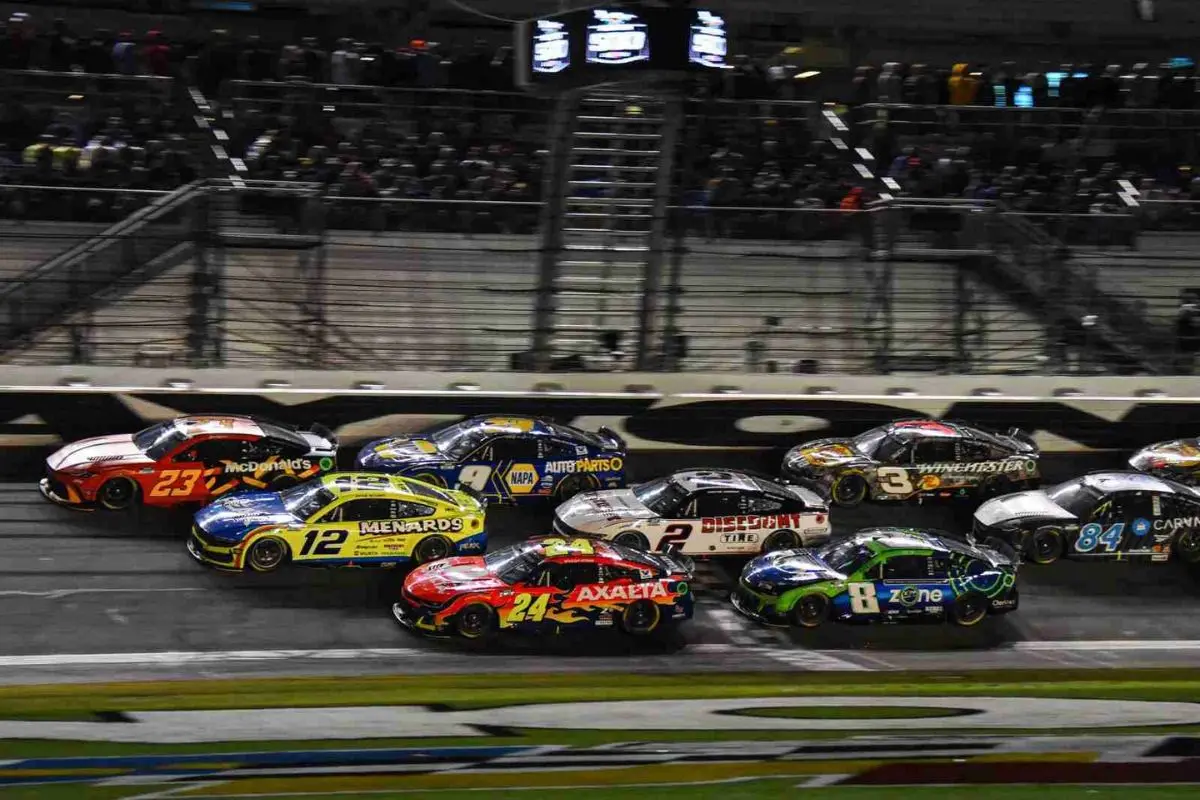
News in Brief: Kevin Harvick Explains Kyle Busch’s Misunderstanding of the Rulebook
The disqualification of Kyle Busch at the Daytona 500, precipitated by the controversial DVP rule, emphasizes the tension between NASCAR’s regulatory intent and the drivers’ competitive aspirations. As Kevin Harvick explained, the updated rule aimed to improve fairness, yet paradoxically, it has spurred considerable discontent.
NASCAR’s response to the following controversy highlights an ongoing dialogue between governance and the racing community, aiming to reconcile procedural integrity with the sport’s inherent unpredictability.
ALSO READ: Kevin Harvick Predicts Ambetter Health 400 Winner, but Snubs the Heavy Favorites

