
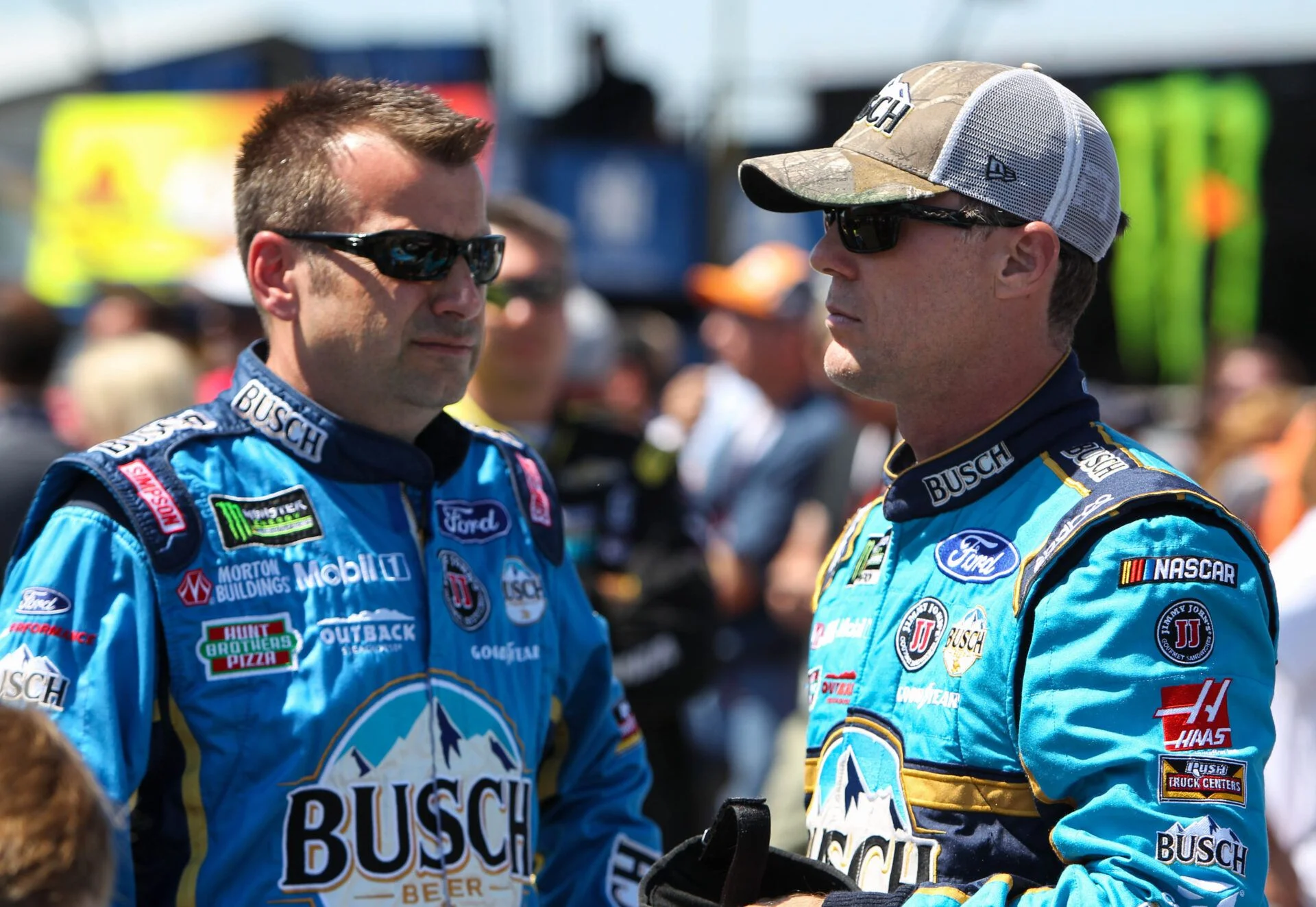
Kevin Harvick has publicly defended Rodney Childers following the recent and surprising crew chief change at Spire Motorsports, which took place just months after Childers joined the team at the start of the 2025 NASCAR Cup Series season. The abrupt departure of Childers, a proven championship winner, has ignited debate across the NASCAR community, with Harvick stepping forward to voice his support and question whether Spire’s decision may prove to be a significant miscalculation. The move not only impacts the No. 7 team and its driver, Justin Haley, but it also forces fans and industry insiders alike to evaluate chemistry versus credentials in a sport where teamwork can make or break success.
Rodney Childers, who only became crew chief for Spire’s No. 7 chevrolet/”>Chevrolet at the beginning of this year, is no stranger to pressure or high expectations. However, few could have predicted that his latest chapter in NASCAR would end so soon. Kevin Harvick’s reaction echoed widespread astonishment, as he admitted, “We saw that the Spire change with Rodney not being the crew chief or working at Spire anymore so that one kind of caught me off guard.” Spire’s announcement revealed that Childers would no longer serve as crew chief, but offered little detail about the internal dynamics leading to the shake-up. The resulting uncertainty has underscored just how quickly fortunes can change, even for those with championship-winning résumés.
As speculation swirled, many insiders pointed to the importance of chemistry in such high-stakes partnerships. Harvick himself highlighted the unpredictable nature of team dynamics, explaining, “I don’t know the inner dynamics of how this team works or how it functions… but the chemistry of how this all goes means something.” Veteran driver Kyle Busch, speaking on The Door Bumper Podcast, offered similar insight by suggesting that Childers’ exit stemmed from a lack of chemistry with Spire’s existing staff. Spire Motorsports’ own co-owner, Jeff Dickerson, seemed to validate these rumors, stating, “You need a spark plug.” His comment hinted at deep-rooted issues that stretched beyond mere results on the track.
Performance, too, played a critical role in the decision. Justin Haley, the driver for whom Childers was calling shots, has experienced a string of disappointing outings, including a 25th-place finish at Talladega and several races where the No. 7 car struggled to challenge for top positions. This contrasted sharply with the stronger performances of teammate Carson Hocevar, who claimed a 6th-place finish at Talladega and even nabbed 2nd at Atlanta earlier in the season. Harvick noted these results, saying, “I think that the 7 didn’t run great again this weekend.” The high-pressure environment of NASCAR, where even minor dips in performance can lead to sweeping changes, left Childers’ position increasingly tenuous.
Kevin Harvick’s perspective on crew chief decisions is grounded in his own racing experience. Recalling a tough call from his team owner days, Harvick shared, “I remember firing a crew chief after the first week when we had the truck teams.” He described acting swiftly when a partnership was not working, telling his general manager after just one Daytona race, “This isn’t going to work.” According to Harvick, quick, decisive moves can be necessary in the cutthroat world of motorsport, despite personal respect for a colleague’s accomplishments and background. His comments emphasized that no matter how impressive a crew chief’s résumé may be, alignment and fit within the team are essential for lasting success.
The implications of Spire’s decision have sent shockwaves throughout the NASCAR paddock. For many, the dismissal of Rodney Childers raised questions about whether the move was justified or a lapse in judgment by a team still seeking its breakthrough moment. Harvick reflected on this tension, stating, “Hopefully he winds up somewhere that’ll really make a difference because I think he can.” Given Childers’ extraordinary track record, another opportunity is almost certain. Yet, Harvick’s remarks show the genuine regret that such a well-respected figure has found himself in this position, and they underscore the brutal realities that often come with high-profile motorsports careers.
Rodney Childers stands as one of the most respected crew chiefs in NASCAR, and his career is a masterclass in perseverance and excellence. He began in the Cup Series in the early 2000s but achieved lasting fame when he joined Stewart-Haas Racing in 2014 alongside Kevin Harvick. Their partnership redefined what was possible in modern NASCAR, capturing victory in their very first race together at Phoenix before going on to win the 2014 Cup Series championship. Their relationship was built on mutual respect, open communication, and an unrelenting commitment to preparation and innovation. Under Childers’ guidance, the No. 4 team amassed over 30 Cup Series wins, while consistently vying for championships across multiple seasons.
Harvick has been open in his praise for Childers, often crediting him for his composure during critical moments and for always staying ahead of the competition when it came to adapting to evolving NASCAR rules. This adaptability and hunger for improvement gave their team a strategic edge year after year, even when rivals struggled to decipher new car packages or regulations. What separated their partnership from many others was not just the combined talent but the foundation of trust and loyalty that allowed them to thrive, particularly during adversity. Both Harvick and Childers prioritized honesty and teamwork, driving the No. 4 car to legendary status within the sport.
Despite their success, the unpredictability of NASCAR means that even established names can confront sudden changes and new environments. Childers’ abrupt exit from Spire Motorsports, while startling, is perhaps unsurprising to those familiar with the sport’s demanding nature. Harvick emphasized this point by suggesting that no matter where Childers ends up, his impact will be felt. “He’s got the credibility and the history of results that go with it,” Harvick remarked. The consensus within the garage is that Childers, given his championship pedigree, will not remain available for long, as teams constantly seek the expertise and leadership required to take their performance to the next level.
The decision by Spire to part ways with Rodney Childers has spurred debates not just about specific results, but about broader philosophies in building a successful NASCAR team. Is relentless pursuit of instant chemistry more vital than giving a proven leader time to adjust and turn things around? Spire’s willingness to move quickly reflects the high-stakes world they inhabit, where sponsors, fans, and team owners all expect results. Yet, letting go of a proven winner so early in a season risks missing out on the sort of breakthrough that often comes after initial struggles have been ironed out. Harvick suggested as much, indicating that while swift changes are sometimes necessary, they can also backfire if they aren’t made for the right reasons.
For Rodney Childers, the road ahead remains open and full of possibility. His credentials as a top-tier crew chief are unquestioned, and his influence on Kevin Harvick’s own Hall of Fame-caliber career provides a strong recommendation for any prospective team. For Harvick himself, the episode is a reminder of how important strong, productive relationships remain even in a sport driven by data, technology, and constant change. Their loyalty to each other remains, regardless of the colors they wear or the garages they call home.
This episode serves as a crucial moment for introspection within NASCAR. Teams like Spire Motorsports are constantly balancing patience with urgency, and the departure of someone like Childers will be a case study in how these choices reverberate throughout the organization and the sport at large. If Childers quickly lands with a more competitive or cohesive operation and guides it to new heights, questions about Spire’s decision will only grow. Conversely, Spire could find the spark they felt was missing and climb the standings, proving that bold, if painful, moves sometimes pay off.
In the end, Kevin Harvick’s defense of Rodney Childers highlights the stakes, the emotions, and the high-wire nature of team building in NASCAR’s elite ranks. Childers’ resume and reputation have been forged over years of triumphs and setbacks, making his sudden dismissal a storyline loaded with passion and possibility for the entire NASCAR community. While Spire’s choice may be controversial, it has brought core issues of trust, communication, and timing to the surface, setting the stage for both Harvick and Childers to write compelling new chapters in their celebrated careers. Fans, teams, and drivers can only watch and wonder what the next twist in this intensely competitive sport will bring.

