
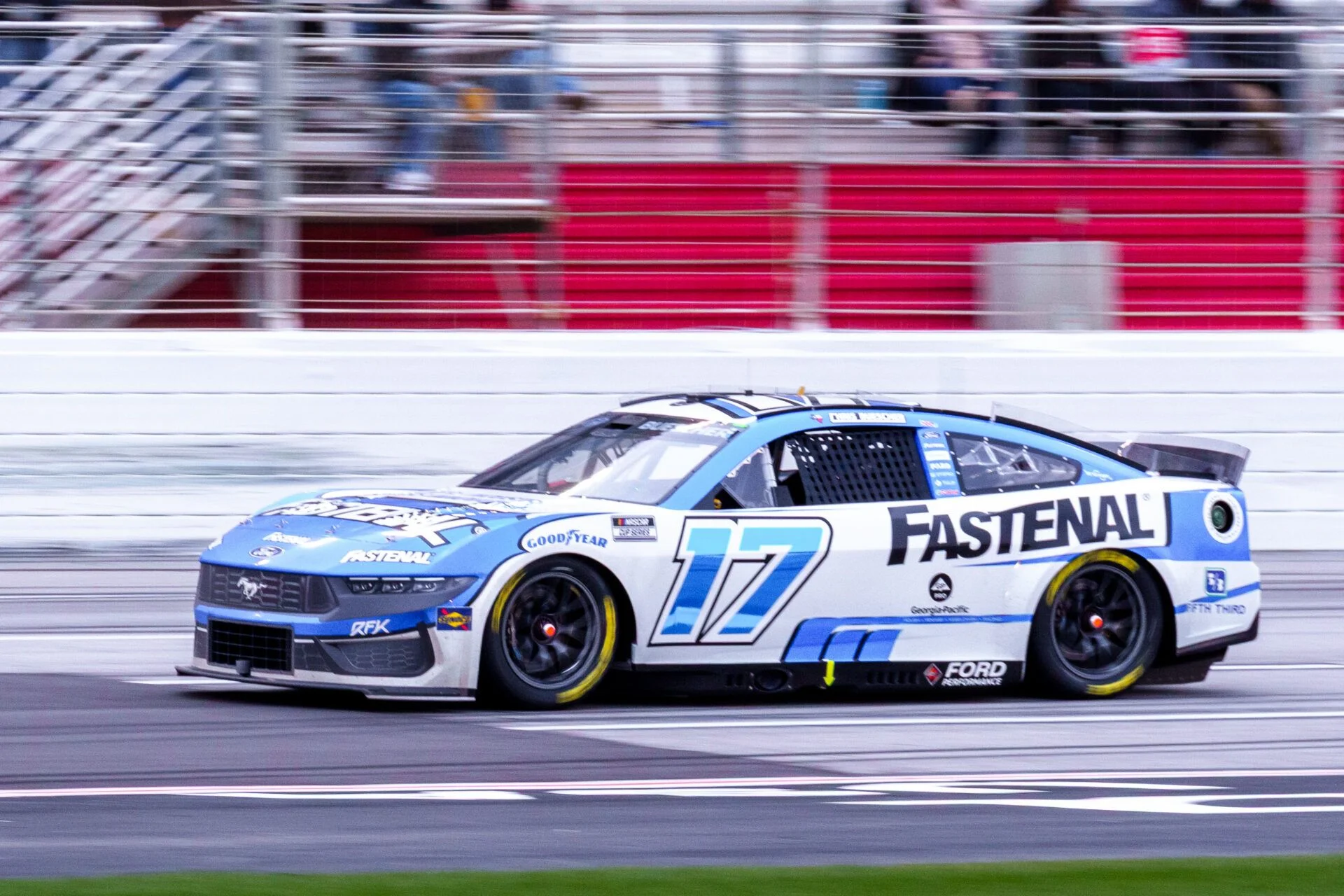
Brad Keselowski, the Michigan native known for his championship-winning prowess, faces mounting challenges as both a driver and co-owner at <a href="https://slicksandsticks.com/tag/rfk-racing/”>RFK Racing. Since stepping into the dual role at the start of 2022—joining forces with Jack Roush and John Henry—his on-track results in the NASCAR Cup Series have dropped dramatically, raising pressing questions about whether the heavy responsibilities of leadership are damaging his racing career. As the 2025 season approaches race number 11 at Texas, Keselowski finds himself ranked a startling 32nd in the standings, with only two finishes inside the top 15 and a string of defeats, including four results of 33rd or worse, three of which ended in crashes.
Before joining RFK Racing, Keselowski was celebrated for his consistent performance behind the wheel. However, the stark change since taking on co-ownership is impossible to ignore. The stats show more than a struggling athlete; they reveal a complex clash between the demands of being a top-tier team leader and the relentless need to perform as a driver. This latest chapter of his career is playing out under intense scrutiny, as fans and analysts speculate whether the dual roles are too much for even a seasoned competitor like Keselowski to handle.
Adding to the pressure, teammates at RFK Racing have delivered considerably better outcomes this season. Chris Buescher, for example, boasts one top-five and five top-10 finishes and sits a much more favorable 13th in the current standings—light years ahead of Keselowski. Even Ryan Preece, the newcomer to the RFK Racing lineup, has achieved one top-five and three top-10 finishes, and, but for a technical disqualification at Talladega due to a missing bolt, would be higher in the points. These comparative statistics sharpen the spotlight on Keselowski’s struggle, as his leadership off the track contrasts starkly with his performance on it.
Examining the circumstances, it is apparent that Keselowski is not lacking in driving talent. Just last year, he captured victory at the notoriously difficult Darlington Raceway, proving he still possesses the skills that earned him the championship earlier in his career. Yet, this season, his average starting position is a disappointing 23.3, while his average finish lags even further at 26.1. Perhaps most alarming, not a single lap led to date—a significant decline for a driver once known for dominating stretches of races. The issue seems less about ability and more about the burdens of juggling too many responsibilities, with the roles of owner and driver colliding to the detriment of both.
Keselowski is no stranger to multitasking, having once managed his own Truck Series team full-time between 2011 and 2017, all while pursuing other business interests. Remarkably, those ventures did little to stunt his on-track competitiveness for Team Penske. The difference now appears to be the scale and stakes involved with RFK Racing. The demands of running a storied NASCAR team while simultaneously competing at the highest level have proved an overwhelming mix, one that even a champion has failed to reconcile so far.
Comparisons to other driver-owners in NASCAR history provide valuable perspective but little comfort. Tony Stewart famously won a championship while co-owning Stewart-Haas Racing, and Kyle Busch achieved dual success leading Kyle Busch Motorsports. Dale Earnhardt and Denny Hamlin have both balanced driving for one team while owning another, yet they avoided the trap of trying to lead and drive within the same organization. Keselowski’s predicament is unique and, for many observers, may be unmanageable long-term.
Opportunities like the one Jack Roush and John Henry gave Keselowski—offering him a stake in RFK Racing while still competing—are exceedingly rare in NASCAR. To have declined could have meant missing out on a seat at the ownership table entirely, potentially shutting him out of the sport’s upper echelons once his driving days ended. As he turned 41 in February, the window for such opportunities grows narrower, and his choice reflects both ambition and foresight, even as it comes at a steep price in performance.
As the season accelerates toward its midpoint, the outlook remains tense. With 26 races yet to go, the pressure intensifies for Keselowski to reverse course and reclaim credibility on the track, not just in the boardroom. If he fails to secure playoff qualification or improve his performance significantly, questions about his future as a driver will become impossible to ignore—both for him and the organization he now helps lead. As one observer bluntly put it, “He owes it to himself, his organization, his co-owners and his and RFK’s fans to face reality and realize he just can’t do both jobs at the same time anymore.”
The fate of RFK Racing hangs in the balance, magnified by the fact that Jack Roush, aged 83, and John Henry, aged 75, may soon step aside. In such a high-stress environment, prioritizing roles becomes essential. For Keselowski, the increasingly urgent reality may be to step out of the driver’s seat and focus entirely on building RFK Racing into a championship-caliber team. The alternative—a continued decline in results and, possibly, a loss of respect within the garage—would cast a long shadow over both his personal legacy and the storied organization he now helps steward.
Ultimately, the coming months are set to define not just a season, but perhaps Keselowski’s reputation as both a competitor and leader for years to come. For RFK Racing, every finish and every leadership decision carries added weight, as the organization navigates an uncertain transition. The intense scrutiny on Keselowski’s performance in this dual role may be uncomfortable, but it is necessary if both he and RFK Racing hope to recapture the competitive edge that once made them formidable—and avoid a future defined by unfulfilled promise.

