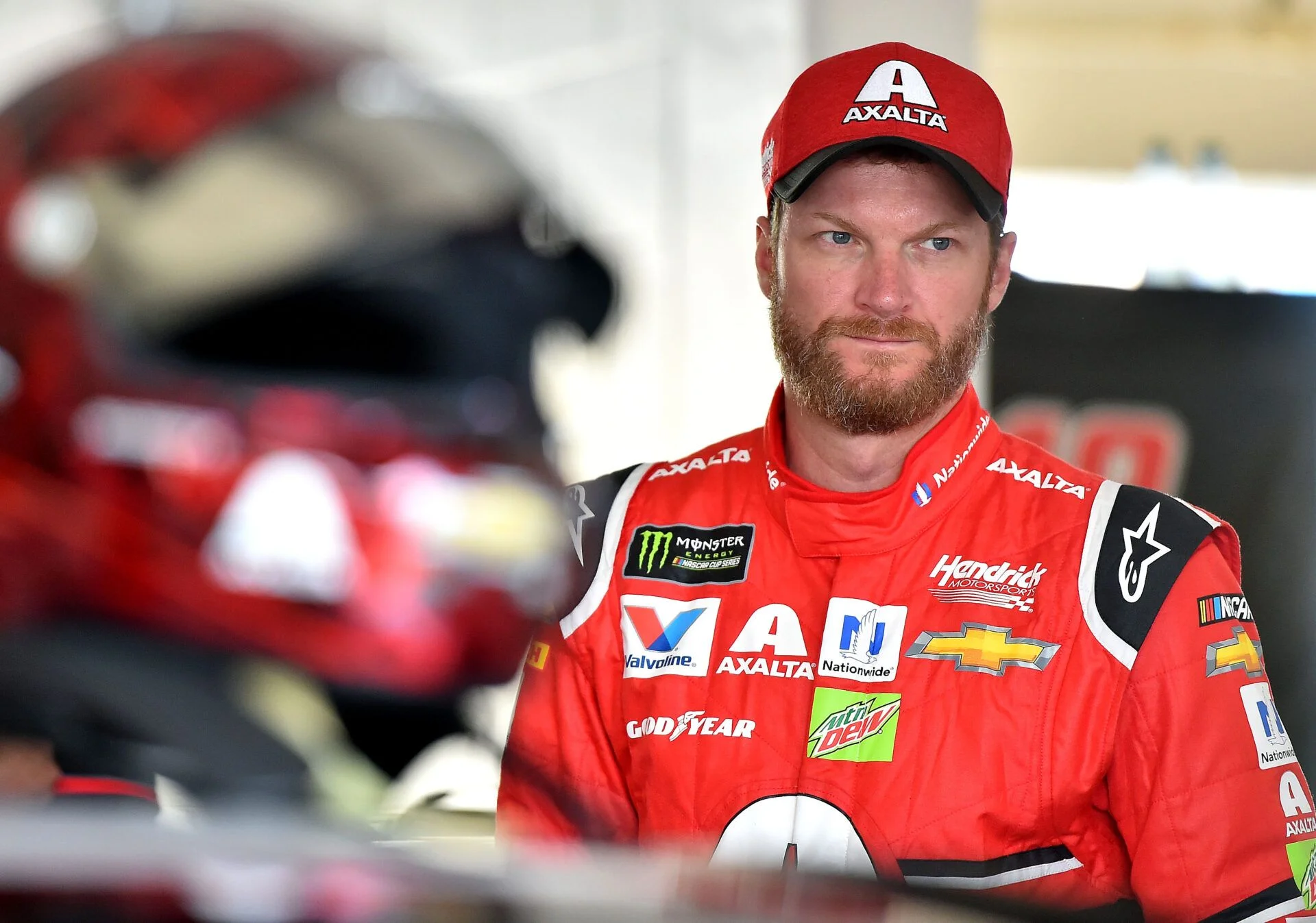
Dale Earnhardt Jr. found himself in the global motorsports spotlight at the 2025 Miami Grand Prix, where a unique blend of excitement and uncertainty unfolded. Attending his first Formula 1 event at the vibrant Miami International Autodrome, Earnhardt Jr. was a guest of Red Bull Racing and Hard Rock, joining elite figures from across the racing spectrum on a weekend marked by electrifying competition and cross-discipline camaraderie. Accompanied by his wife, Amy, he took in the pulsating atmosphere, shared live updates online, and sparked headlines with his genuine enthusiasm for the world of F1. Yet, after a brief but memorable interaction with reigning Formula 1 champion Max Verstappen, Earnhardt Jr. left with mixed emotions — lauding Verstappen’s impact but lamenting a missed opportunity for deeper conversation.
For Dale Earnhardt Jr., the occasion represented much more than a simple spectator experience. Sharing a moment with Max Verstappen, he faced the rare chance to connect with a driver whose influence has radiated well beyond Formula 1, especially within the growing universe of sim racing. As Earnhardt Jr. recounted, he hoped to express profound gratitude for Verstappen’s commitment to legitimizing sim racing around the world, a cause that has become increasingly significant as technology and traditional racing converge. In a world where virtual preparation is now as vital as laps on track, both drivers stand out — Earnhardt Jr. as an early advocate, and Verstappen as a modern champion. Despite the gravity of this shared passion, Dale Earnhardt Jr. admitted he let the moment slip, defaulting instead to small talk about the unpredictable weather in Miami.
“I wanted to tell Max like, ‘Dude, I appreciate everything you do for the sim world, you legitimize it,’”
Earnhardt Jr. confessed after the race. His admiration stems from his own decades-long journey in sim racing, where early efforts to convince teams of its value were often met with skepticism.
“Twenty years ago, when I tried to tell my team that Sims were cool… they laughed and now they’re all spending millions of dollars,”
he reflected. The landscape, however, has changed dramatically, with race teams across the highest levels of NASCAR and Formula 1 investing heavily in simulators that replicate real-world conditions with astonishing realism.
Max Verstappen’s influence in this transformation is well recognized. Outside the F1 paddock, Verstappen is a dominant presence in professional sim platforms such as iRacing and rFactor, lending credibility and global attention to virtual racing endeavors. In their Miami exchange, however, Earnhardt Jr. could only smile ruefully at his own restraint.
“I wasted my opportunity of conversation on something frivolous…”
he acknowledged, recalling how their conversation took a casual turn. Instead of delving into the future of sim racing, he brought up the impending threat of rain — a detail that seemed insignificant in hindsight.
Describing the moment, Earnhardt Jr. said,
“I was like, ‘Man, it might rain today, you know. How do you feel about the wet?’”
Verstappen, renowned for his mastery in challenging weather conditions, responded with calm confidence:
“I’ve been running in the rain all my life… even when I was a little kid, just playing in the yard or around my streets, you know, as a kid on karts and stuff.”
Verstappen’s poise was obvious, reflecting the same grit that propelled him through the treacherous Brazilian Grand Prix in São Paulo in 2024 and solidified his reputation as a rain-racing virtuoso. Still, the brief interaction between two generations of racing icons ended without the deeper discussion Earnhardt Jr. now wishes he had pursued.
The disappointment lingered, especially given how much sim racing has transformed the entry pathway to professional motorsports. Young NASCAR standouts like William Byron, Ty Majeski, and Rajah Caruth began their journeys in the world of online racing, earning recognition for digital prowess long before taking their first green flags. Traditionally, though, the route to a NASCAR seat winds through the grassroots — dirt ovals and local tracks, where drivers demonstrate raw skill and determination. As Earnhardt Jr. noted, this rugged tradition continues to define rising stars like Kyle Larson and Christopher Bell, two drivers whose achievements have come from real-world racing as much as the virtual.
New faces keep emerging, further illustrating the evolving landscape Dale Earnhardt Jr. has long championed. Keelan Harvick, the talented son of veteran driver Kevin Harvick, made headlines with his recent debut in the CARS Tour Pro Late Model series at Cordele Motor Speedway, showing sharp instincts gained outside the iRacing scene. Meanwhile, Brexton Busch, winner of the 2025 Golden Driller, demonstrated command of dirt tracks that suggests NASCAR’s future could soon belong to a new generation of fearless, dirt-hardened drivers. For Earnhardt Jr., observing this transformation from both digital and traditional perspectives has underscored the need for dialogue across all forms of racing.
That was precisely why his conversation with Verstappen mattered so much. Dale Earnhardt Jr. saw in Verstappen not only a world champion but a fellow pioneer — someone helping bridge the gap between the physical and digital. Having advocated for advancements in automotive technology and driver development for over two decades, Earnhardt Jr. recognized what it would mean to connect on their mutual passion for sim racing’s continued growth. The missed opportunity in Miami now stands out as a moment of regret but also of motivation — a reminder of how even icons can falter, and how new opportunities for connection may yet arise.
In the backdrop of this interaction, greater changes swirl in the world of NASCAR and Formula 1. Red Bull Racing, already dominant in Formula 1 with Verstappen at the helm, has also begun to retread paths into American stock car racing. Unlike the ill-fated full-team Cup Series campaign from 2006-2011, the Red Bull approach today is subtler and more strategic. Focusing on the support and mentorship of exceptional drivers such as Shane van Gisbergen, a three-time Supercars champion now running part-time in NASCAR with Trackhouse Racing, Red Bull is building bridges between continents and championships, rather than fielding an entire team outright.
Connor Zilisch, a teenage prodigy from North Carolina, has also attracted Red Bull’s attention, with a development path mapped out alongside Spire Motorsports. These moves by Red Bull suggest a new philosophy — one that prizes flexibility, branding, and superstar support over massive infrastructure.
“They’re kind of dipping their toe in the water instead of just diving into the deep end,”
Earnhardt Jr. remarked in a recent podcast, highlighting the wisdom of a driver-first approach in a rapidly changing sporting landscape. The lessons of past ventures remain vivid, with Dale Earnhardt Jr. recalling how Red Bull’s initial foray into NASCAR was greeted with both skepticism and hope.
“While we wanted to kick their ass on the racetrack, we wanted the Red Bull brand to succeed in our sport,”
he said, reflecting both competitive fire and mutual respect.
For Dale Earnhardt Jr., the Miami Grand Prix brought both triumph and uncertainty. On one hand, he fulfilled a dream of witnessing Formula 1 at its highest level, engaging with legendary team figures and taking part in the fevered buzz of international motorsport. On the other, his regret underscored just how meaningful simple moments of understanding can be, especially when the conversation touches on the future of technology and the authentic experience shared by racers everywhere. Earnhardt Jr.’s perspective — shaped by years behind the wheel, as well as in the virtual cockpit — continues to resonate as both sports evolve.
The impact of such brief, seemingly casual moments can ripple outward. Fans and analysts alike now debate if Dale Earnhardt Jr. truly missed a one-time chance to shape discourse about sim racing’s future alongside Verstappen, who sits atop both the F1 world and the sim racing charts. The possibility that their dialogue could have driven wider change in motorsports training is a tantalizing “what if,” setting the stage for potential progress on both sides of the Atlantic.
With sim racing’s profile at an all-time high, and international brands like Red Bull maneuvering for influence in American motorsports, the boundary between real-world and virtual racing continues to fade. Dale Earnhardt Jr. stands at the center of this movement, having experienced the skepticism and now witnessing the validation that comes with giants like Verstappen leading by example. Both athletes, in different stages of their careers, understand the weight of public perception and the opportunities that new technologies create.
Moving forward, the Miami encounter could serve as a catalyst for further collaboration between icons like Dale Earnhardt Jr. and Max Verstappen. As NASCAR considers evolving its rules, eyes hybrid engines, and welcomes new international talent, the cultural exchange within motorsports seems only poised to accelerate. Earnhardt Jr.’s experience in Miami is a lesson in gratitude, humility, and the evolving responsibilities of championship-caliber drivers in a connected era.
Ultimately, for high school fans and future drivers alike, the story stands as a powerful lesson: in the fast-moving world of racing, opportunities can vanish as quickly as they arise, and even the biggest names sometimes wish they’d said more. Dale Earnhardt Jr.’s heartfelt regret not only humanizes a legend but also reminds everyone in the racing ecosystem — from grassroots competitors to world champions — that listening, learning, and connecting matter, sometimes just as much as a checkered flag. With anticipation building for a potential follow-up encounter, all eyes turn to the growing relationship between Formula 1 and NASCAR, and to the leaders capable of shaping the next evolution in racing history.