
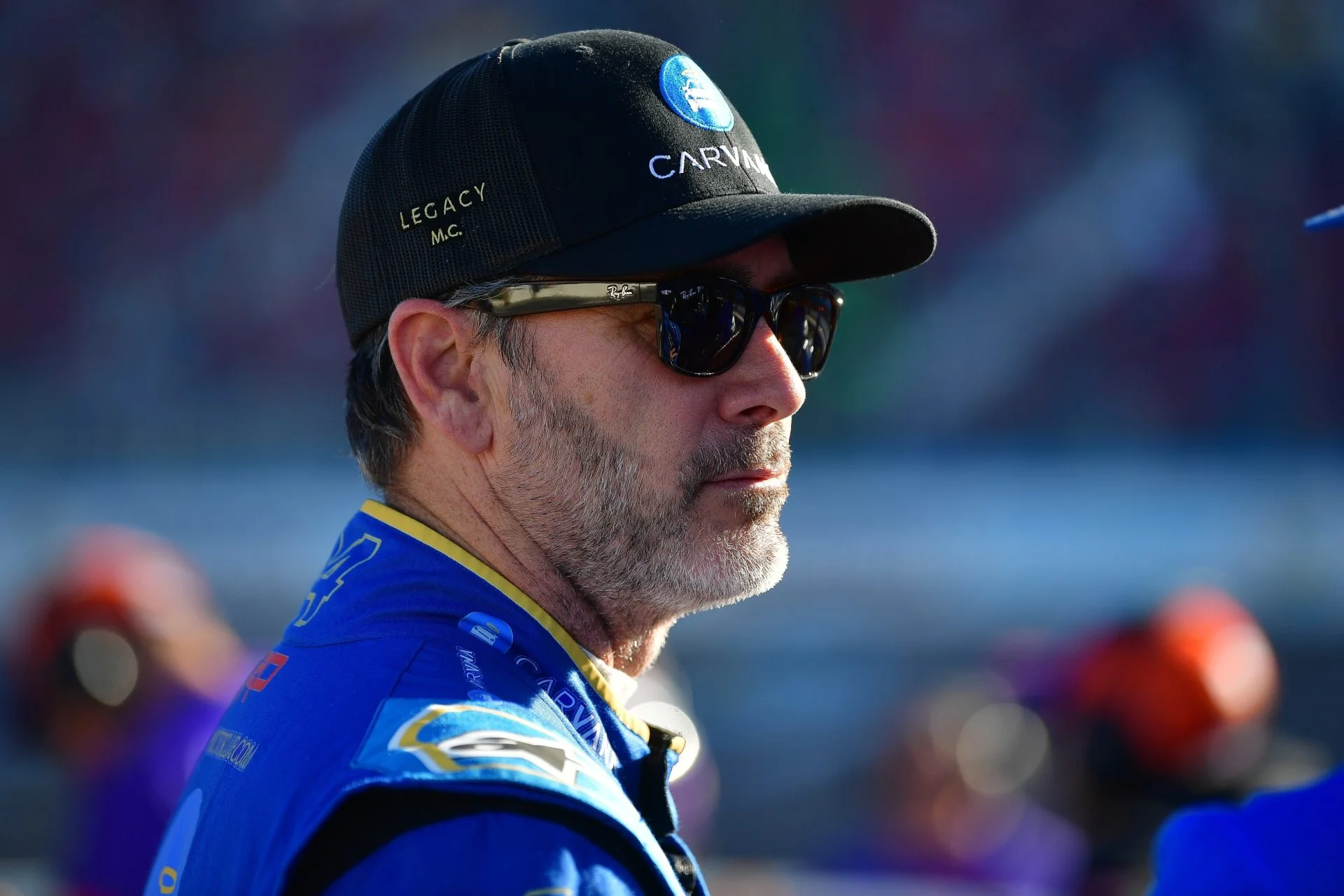
Jimmie Johnson, a legendary seven-time NASCAR champion, has long been recognized for his relentless determination on the track and his composed demeanor off it. Recently, the impact of Jimmie Johnson’s NASCAR driver mental health therapy approach has extended well beyond his own career, influencing the next generation of racers. This shift came into sharp focus when William Byron, currently leading the driver standings and known for his calm under pressure, revealed in Netflix’s “NASCAR: Full Speed” Season 2 that he had begun working with a sports therapist, drawing direct inspiration from Johnson’s well-known advocacy for mental health support.
Throughout his racing career, Jimmie Johnson was celebrated not just for victories, but for his ability to keep calm in intense situations, often tuning out distractions and focusing on the race ahead. What many didn’t see, however, was his quiet reliance on professional therapists during difficult periods, including personal tragedies such as the passing of his brother-in-law in 2004. Johnson himself has spoken about the importance of therapy, saying that sports counselors help athletes see that they are not alone in their struggles and provide valuable tools for managing emotions and maintaining focus under pressure.
Johnson’s openness about mental health and his willingness to endorse therapy within the high-intensity culture of NASCAR has set a new standard, providing reassurance for other athletes and creating a supportive environment in a fiercely competitive sport. His success both on and off the track demonstrates the real benefits of investing in mental wellness, making Jimmie Johnson’s approach a model to emulate. William Byron, inspired by Johnson’s example, now embraces this mindset as he faces the challenges of his own rapidly rising career.
Byron, who grew up watching Johnson and now drives the iconic No. 24 car, described his motivation:
“What made me want to do it [see a sports therapist] is just I felt like I was a very quiet communicator, and I didn’t say a lot, and I felt like that was getting in the way of our success or potential success as a team. But then it transitioned to learning more about myself as a person.”
He acknowledged the initial difficulty in opening up, admitting,
“At first, it was really hard to, like, tell her everything and sometimes I feel like I don’t say as much as I should and I’m like, dang it, like I should have said this or I should have gone into more detail but I just try to give her everything that’s on my mind.”
The willingness of both Jimmie Johnson and William Byron to pursue therapy sends a powerful message across NASCAR and the wider sporting world: mental health matters. Their example demonstrates that mental strength is just as crucial as physical skill, paving the way for others to seek help without hesitation. As Byron continues to build on his early season successes, his embrace of Jimmie Johnson’s NASCAR driver mental health therapy approach may not only enhance his own performance, but also inspire a lasting culture shift within the sport. The significance of this development lies in its ability to foster healthier athletes, stronger teams, and a new understanding of what it takes to truly compete at the highest level.

