Kevin Harvick has ignited a heated debate in global motorsport by sharply criticizing the FIA’s Super Licence system, arguing that the current rules unfairly block top American talent—such as NASCAR star Kyle Larson—from entering Formula 1. Speaking in May 2025, Harvick called out the licensing framework on his “Happy Hour” podcast, claiming the process is outdated and biased against drivers who have excelled outside the traditional European racing ladder. With motivation soaring among American drivers to prove themselves at the world’s highest level, Harvick’s remarks have triggered widespread scrutiny of the FIA’s system and raised urgent questions about the future of international racing.
The controversy intensified after Kyle Larson’s public comments in 2024, when he confidently declared his belief in being a superior all-around driver compared to then three-time F1 champion Max Verstappen.
Larson said, directly challenging the accepted hierarchy in motorsport. While Verstappen responded with calm deference, acknowledging everyone’s strengths, the debate gained momentum as American fans and experts rallied behind Larson’s challenge.
Interest in seeing Larson transition to Formula 1 quickly grew. He openly expressed a desire to make the leap, specifying that a proper test, such as one after the Abu Dhabi Grand Prix, would offer a fair showcase of his talent.
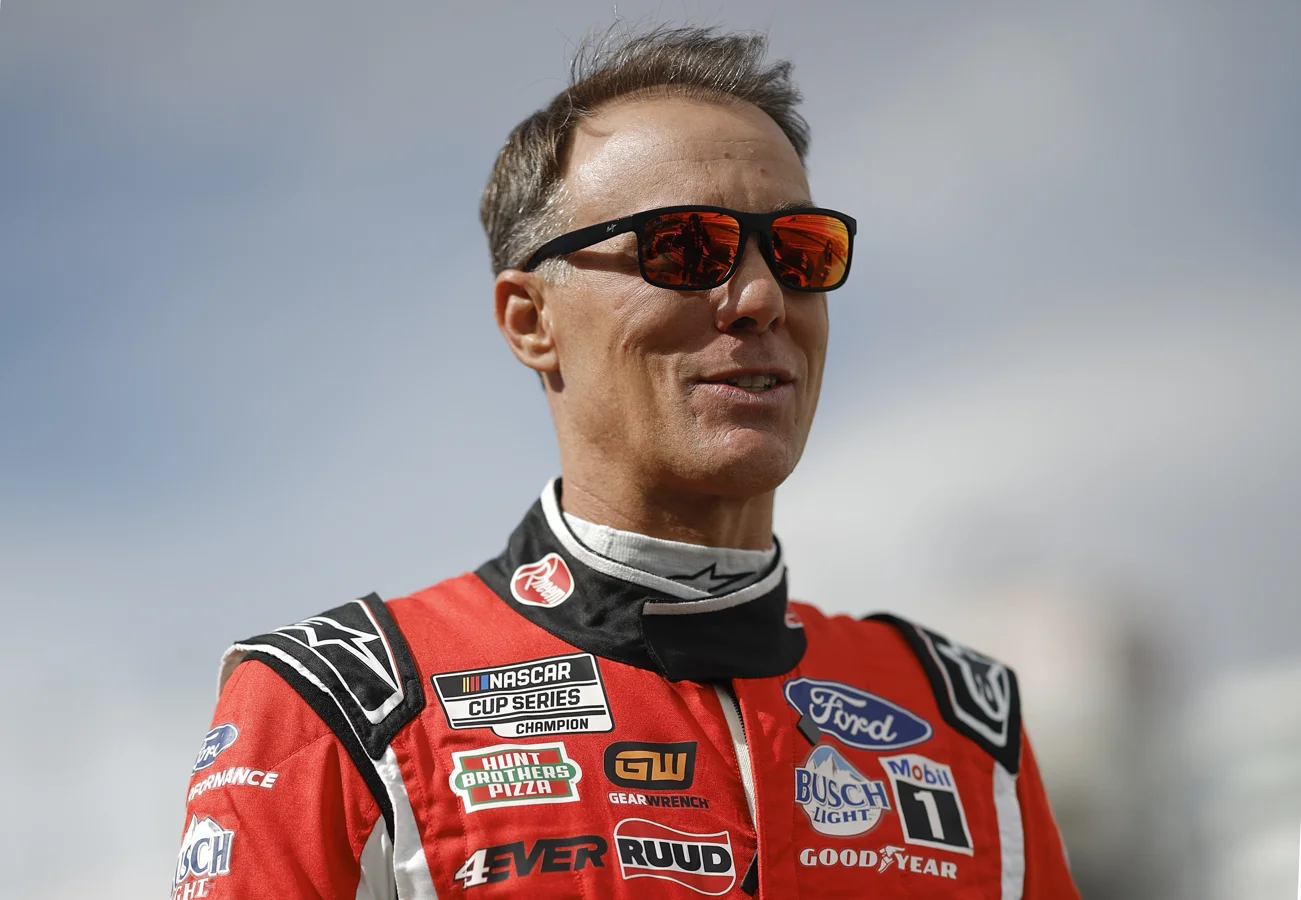
Larson stated candidly on Kevin Harvick’s podcast. Despite this ambition, Larson and his supporters have encountered a frustrating barrier: the FIA’s Super Licence requirements.
Former F1 journalist Will Buxton joined Kevin Harvick in expressing disappointment at the current system, highlighting its inconsistencies.
Buxton argued. He expressed frustration that internationally recognized and multi-disciplinary talents like Kyle Larson are held back by a points system that undervalues their achievements. Buxton voiced what many fans feel:
Introduced in 2016, the FIA’s Super Licence system obliges drivers to collect at least 40 points within three years, awarding these based on finishing positions in specific approved series. While Formula 2 and Formula 3 offer significant points, even to mid-level finishers, U.S.-based series lag far behind. For instance, an IndyCar runner-up receives fewer points than a third-place finisher in F2, and a NASCAR Cup Series champion secures merely 15 points—less than half what is required. As a result, drivers like Kevin Harvick and Kyle Larson, who have dominated American racing but taken unconventional routes, struggle to access Formula 1 opportunities.
Kevin Harvick did not mince words in his broader criticism.
Harvick stated bluntly. His view, echoed by many in the U.S. motorsports community, is that the Super Licence system systematically favors drivers who rise through the FIA’s affiliated ladder, defaulting to European experience and sidelining talent from globally respected American series.
Since 2022, critics have pointed to glaring flaws in the system, starting with the case of Colton Herta. Despite multiple race wins and podiums in IndyCar, Herta was barred from joining AlphaTauri’s F1 operation due to a shortage of Super Licence points, leading the FIA to deny a requested waiver. Throughout this episode, voices from all corners argued the system was inflexible, outdated, and fundamentally unfair. McLaren CEO Zak Brown directly addressed the problem:
Legendary driver Mario Andretti was even blunter, describing the decision as “pure politics,” and Red Bull’s Helmut Marko called it “a mockery of talent.”
In stark contrast, NASCAR has readily embraced stars from other disciplines. Kimi Raikkonen, after a career in Formula 1, and Helio Castroneves, famed for his IndyCar triumphs, were both offered NASCAR opportunities based on reputation and recent experience alone. American stock car racing celebrates international achievements, welcoming crossover stars. Kevin Harvick has frequently highlighted this openness, suggesting that such willingness to accept talent regardless of origin could benefit Formula 1 as well.
Against this backdrop, the saga involving Dale Earnhardt Jr. and Kyle Larson further underscores the complexity and contradictions of opportunity across racing disciplines. Just weeks prior to the Texas Motor Speedway race, Dale Jr., owner of JR Motorsports, responded negatively to Larson’s claim that he could “embarrass the Xfinity Series field.” This tension between two American racing icons seemed to close doors. However, when an injury to Connor Zilisch left JR Motorsports without a driver, Dale Jr. turned to Kyle Larson despite recent disagreements. He candidly admitted on his “Dale Jr. Download” podcast that his feelings about Larson had shifted.
This kind of reversal, where personal grudges are set aside in favor of proven talent, is rare but speaks volumes about meritocracy in American racing. Even critics acknowledge Kyle Larson’s ability behind the wheel, recognizing his elite pedigree and unique crossover appeal. It is precisely this reputation that makes the FIA’s refusal to adapt the Super Licence points allocation seem all the more rigid and exclusionary.
Public discourse around the issue has become increasingly intense, with fans, journalists, and professionals using social media to challenge the existing order. Will Buxton captured the widespread frustration succinctly, noting the desire to see drivers like Kyle Larson attempt both the Indy 500 and the Monaco Grand Prix.
he said, reflecting growing impatience for reforms that would allow global stars to test themselves at motorsport’s pinnacle.
The Super Licence system does not simply act as a bureaucratic barrier—it shapes entire racing careers and international visibility. For Kevin Harvick, the stakes are high and the implications far-reaching. He argues that preventing American drivers from competing in F1 represents not just a loss for individuals like Kyle Larson, but a broader failure to acknowledge the caliber of North American motorsport. Fans, Harvick insists, crave genuine competition and the thrill of seeing national champions go head-to-head with the world’s best. Instead, the system entrenches silos, forcing drivers to abandon their established routes or abandon their F1 dreams altogether.
Larson’s journey underscores the arbitrary nature of the points-based approach. Despite finishing well in the 2024 Indy 500—where he ran inside the top 10 before a penalty set him back—he would still fall short of the requirements for an F1 seat. As the rules stand, neither his NASCAR championship nor his IndyCar performances gain him enough credit, diminishing both achievements and aspirations. These barriers haven’t just frustrated athletes but have also demoralized fans who want to see boundaries between racing disciplines dissolve, opening racing’s elite level to all deserving talent.
It is not only American talent on the periphery. The existing system affects drivers worldwide who spend years gaining recognition in domestic series, only to find the door to Formula 1 firmly shut. Critics allege that it is designed to protect European interests, ensuring a conveyor belt from karting through F3 and F2 but failing to recognize the sheer volume of skill elsewhere. In response, the FIA has occasionally offered waivers, but these are rare and have come under scrutiny for their inconsistency—further undermining faith in the process.
As debate rages, Kevin Harvick remains at the forefront, calling for reform with renewed urgency. On his podcast, he described the status quo as “a very dumb process,” arguing,
Will Buxton agreed, emphasizing that barriers do not only hurt individuals, but they also withhold value from fans and the sport at large. McLaren’s Zak Brown, Mario Andretti, and Helmut Marko—all figures of immense authority in motorsport—have joined Harvick in pressing for fairer evaluation of American and international achievement.
Meanwhile, Formula 1 management faces mounting pressure to clarify the future of the Super Licence system. Some insiders believe an overhaul is inevitable, especially if the series wishes to capitalize on surging U.S. interest boosted by events like the Miami and Las Vegas Grands Prix. Formula 1’s success in the U.S. market depends in part on relatable American stars lining up on the grid—a vision that public figures like Kevin Harvick see slipping away under current policy.
For Kyle Larson personally, the clock is ticking. At the height of his powers, with major victories in NASCAR and strong showings in IndyCar, this may be his best chance to attempt the leap. Yet without intervention from the FIA, even the combined voices of Will Buxton and Kevin Harvick may prove insufficient. “Trying isn’t enough,” Buxton lamented—a phrase that now haunts supporters of American hopefuls eyeing Formula 1. Meanwhile, U.S. fans continue to debate whether Larson should be given a direct chance, many suggesting that his track record and sheer talent warrant an immediate seat at the F1 table.
The controversy goes beyond one individual. At its core, Kevin Harvick’s outcry about the Super Licence shines a spotlight on justice, recognition, and equal opportunity in international motorsport. The frustration of American racing stalwarts is not about entitlement but about seeking a system where every champion—regardless of geography or discipline—is judged fairly. The negative tone of the discourse, intensified by passions on both sides, underscores the seriousness with which the issue is regarded in both the NASCAR and Formula 1 worlds.
Looking ahead, the key question will be whether Formula 1 and the FIA acknowledge these criticisms and take meaningful action. Should they maintain the status quo, risks include alienating top non-European athletes and their legions of fans, potentially stunting the very global growth F1 now seeks in America. If, however, they heed Kevin Harvick’s warnings and prioritize inclusion, the sport stands to gain not only in spectacle but also in legitimacy. For now, the pathway to Formula 1 remains treacherously narrow for drivers like Kyle Larson, as Kevin Harvick’s somber critique continues to reverberate on both sides of the Atlantic.