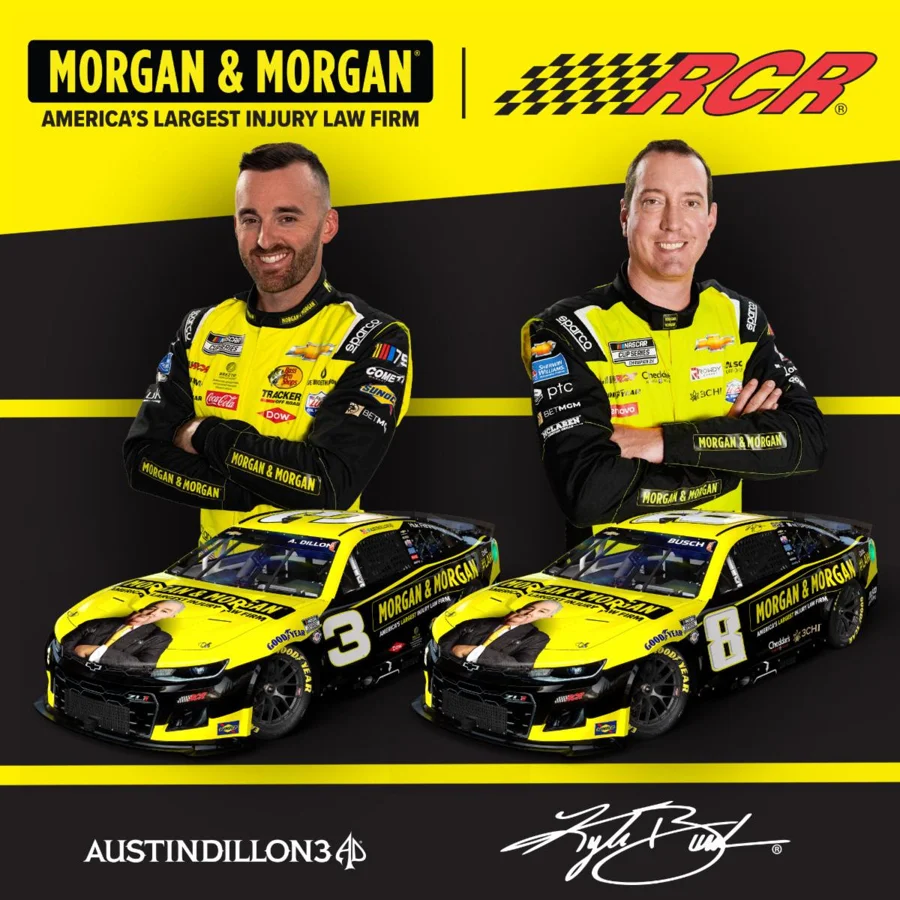
Kyle Busch has secured a major sponsorship deal with Richard Childress Racing, marking a powerful alliance just as the team faces a critical period. Announced ahead of his anticipated run at Darlington Raceway on August 31, the new multi-year partnership will see Morgan & Morgan, America’s largest injury law firm with an estimated value of $2 billion, back Busch and RCR. This collaboration arrives after a turbulent stretch for both the driver and the team, aiming to inject renewed energy and resources as the Cup Series season intensifies.
This landmark deal reunites Busch with the backing of a high-profile sponsor, reminiscent of his years at Joe Gibbs Racing, where he was championed by Mars, M&M’s parent company. The shift comes at a pivotal time: RCR is reeling from a difficult 2024 campaign, and Kyle Busch, a two-time NASCAR Cup Series champion, is grasping for momentum after failing to notch a single Cup win last season—a first in his career. Now, with Morgan & Morgan secured as a major financial supporter, hopes are high that 2025 could herald a competitive resurgence for the No. 8 team.
The backdrop to this sponsorship is rooted in a heartbreak for both Busch and his former team. In 2022, despite long-term mutual loyalty between Busch and Joe Gibbs Racing, their partnership ended when Mars withdrew its approximately $20 million annual sponsorship. Though JGR offered what was considered a competitive compensation package, the absence of a replacement sponsor with Mars’ resources created an unsustainable situation. Busch ultimately walked away, signaling the end of an era that spanned 15 seasons but immediately opened the door to new opportunities. Reflecting on this journey, Busch revealed,
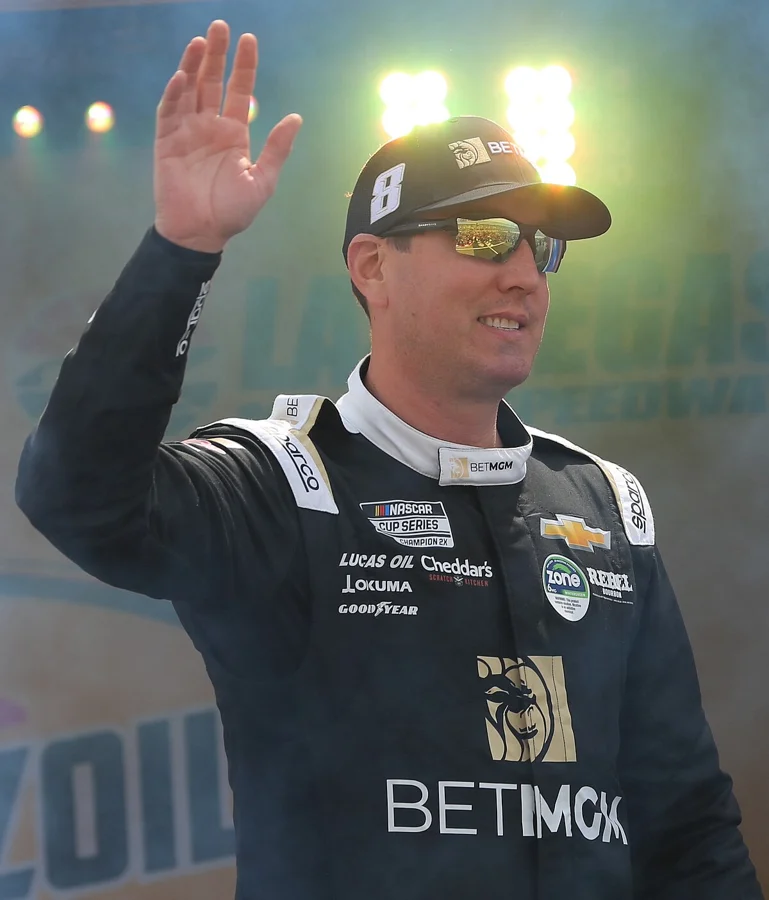
Strikingly, the same $2 billion backer has now returned, not with JGR, but as the critical force behind Busch’s campaign with RCR. With the new deal, Morgan & Morgan will expand its visibility on Busch’s No. 8 chevrolet/”>Chevrolet, starting with the Darlington race and continuing for multiple years and events.
The partnership has immediately drawn industry attention. Richard Childress, RCR’s chairman, praised the deal, stating,
The alliance underscores the importance of values alignment and community engagement, two traits emphasized by both the sponsor and the team.
For Kyle Busch, the Morgan & Morgan sponsorship is more than just another corporate partnership—it represents a vital lifeline for a driver whose recent years have been marked by struggle and transition. Although last year the law firm’s distinct yellow livery made its debut at the Southern 500, where Busch fought for playoff contention, the race ended in disappointment. This time, the stakes are higher, and both RCR and Busch are determined to capitalize on the renewed momentum.
Dan Morgan, the managing partner at Morgan & Morgan, commented,
The announcement has been met with enthusiasm and anticipation from both fans and industry watchers, highlighting the strategic timing of the multi-year agreement.
The timing of the sponsorship provides critical support to a team striving to turn its season around. During 2024, RCR and Busch battled inconsistency and a frustrating lack of race pace, culminating in a 20th place finish in the final standings and no visit to victory lane—a rare drought for Busch. The statistics are jarring: five DNFs, a failure to break into the top ten in recent races, and a devastating crash at Texas Motor Speedway after a promising start. The trend has troubled both the veteran driver and the team, with Busch currently clinging to the last playoff position, while young drivers like Carson Hocevar and Ryan Preece loom just behind, eager to capitalize on any misstep.
Industry debate has centered on whether Kyle Busch, known for his fierce competitiveness and nickname “Rowdy,” has lost his edge or whether the responsibility lies with RCR’s inability to provide a competitive car. The situation is complicated, drawing conflicting opinions from fans and analysts. While some suggest that Busch’s racing prowess may be fading, others point to RCR’s struggles in adapting to the evolving Cup Series landscape, citing a lack of speed and inconsistent strategy.
For Busch, the past two years have represented a challenging adjustment. The split from Joe Gibbs Racing was not what either side wanted, but the economic realities of top-tier motorsport intervened. When Mars, M&M’s parent company, informed JGR it would not renew its sponsorship, the team simply could not match the resources needed to maintain a championship-caliber alliance. The subsequent deal with RCR initially seemed promising, but on-track results have lagged behind expectations—a pattern both distressing and motivating for Busch, who has never lacked competitive fire.
Through it all, Busch has reflected publicly on his professional journey, particularly the loss of camaraderie and personal connection he felt during his years with toyota/”>Toyota and his own racing outfit, Kyle Busch Motorsports (KBM). In a candid interview on the “Door Bumper Clear” podcast, Busch revisited the emotion and decisions behind the sale of KBM to Spire Motorsports. Founded in 2010, KBM achieved remarkable success in the NASCAR Craftsman Truck Series, securing 100 victories and nurturing stars like Christopher Bell, William Byron, and Erik Jones.
Busch said, reflecting on what he left behind.
By 2023, the realities of the business dictated his next move. KBM, along with its truck, equipment, Mooresville, North Carolina facility, and Busch’s chassis-focused Rowdy Manufacturing, was sold to Spire Motorsports. Financial figures were not disclosed, but industry chatter placed the total at around $25 million, with the facility alone fetching more than $14 million. Busch described the process as both practical and poignant:
Despite the necessity of letting go of KBM, Busch has not completely stepped away from hands-on racing in the lower series. Through an agreement with Spire Motorsports, he continues to run up to five Truck Series races annually, which gives him the chance to re-experience the thrill of victory and the developmental mentorship that originally shaped his reputation as both a driver and an owner. This arrangement has kept his competitive spirit alive, even as the challenges on the Cup side have intensified.
As he adapts to the current environment and aims to break the recent cycle of underperformance, Busch has looked to his new surroundings at RCR for the opportunity to return to form. The arrival of Morgan & Morgan as a major sponsor is more than symbolic; it is a clear message that RCR is willing to invest in giving Busch and the entire No. 8 crew the resources they need to compete at the highest level. The scope and ambition of the sponsorship send ripples across NASCAR, as this is the first time a trial injury law firm has stepped into the Cup Series as a primary supporter, setting a precedent for novel partnerships in a sport where fast money and business alignment are often as important as mechanical ingenuity.
The news has also resonated strongly with NASCAR’s fan base. Social media lit up after Busch’s own enthusiastic post, which read,
The momentum behind the partnership has quickly emerged as a bright spot in an otherwise difficult season, suggesting that sponsors and fans alike recognize the mutual potential in Busch and RCR’s efforts.
Nevertheless, question marks hover over what comes next. While the sponsorship is a significant morale and financial boost, the path back to consistent wins and championship contention remains uncertain. Neither the talent of Kyle Busch nor the determination of the RCR organization have been in doubt. The emergence of a $2 billion sponsor at the center of their efforts provides an opportunity—but not a guarantee—of turning fortune around.
Looking ahead, the stakes for the remainder of the 2025 Cup Series season are rising. With the Playoffs looming and younger drivers increasingly competitive, the pressure on Busch and RCR to convert their renewed backing into tangible results is intense. Analysts have expressed varying opinions about what RCR needs to change. Some point to engineering and strategy, others to race-day decision-making. Nearly all agree, however, that having a sponsor of Morgan & Morgan’s caliber is an essential first step in giving Busch every chance to recapture his former heights.
Ultimately, the agreement between Kyle Busch, RCR, and Morgan & Morgan represents a confluence of necessity, ambition, and calculated risk. The team’s moves have been deliberate, aiming to position one of NASCAR’s most marketable and talented drivers at the front of the field once again. At a time when the sport faces renewed scrutiny over driver-team relationships, corporate influence, and competitive balance, the outcome of this partnership will be watched closely.
For Kyle Busch, the spotlight is as intense as ever. Known for his brash confidence and winning mentality, he is determined to prove that his skills remain sharp, and that with the proper support, he can still compete with NASCAR’s best. His alliance with RCR—now strengthened by Morgan & Morgan’s game-changing support—is poised to define the next phase of his career. Whether it results in a triumphant return to the winner’s circle or another heartbreak, NASCAR fans, sponsors, and competitors alike are certain to take notice.
The significance of this event extends beyond financial arrangements; it is a litmus test for the broader relationship between driver, team, and sponsor in modern NASCAR. While the future remains uncertain, the determined optimism in the RCR camp is palpable. The impact of Morgan & Morgan’s backing has the potential to tilt the competitive balance not only for Kyle Busch but for the entire Cup Series. Expectations are high, and as the season progresses, all eyes will remain fixed on whether this sponsorship can help deliver the turnaround story Busch and RCR have been waiting for.