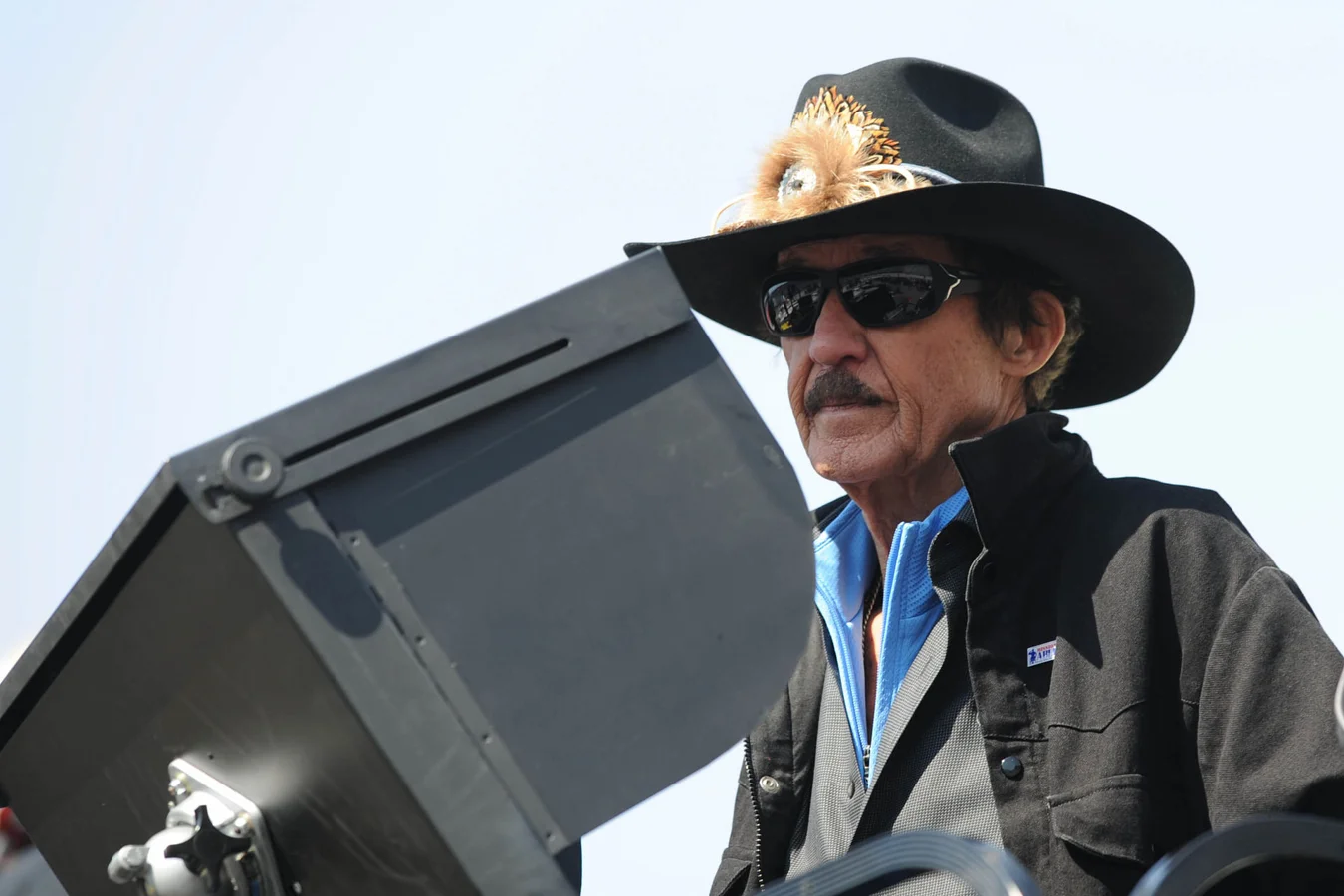
Richard Petty led the landmark Richard Petty Talladega NASCAR boycott in 1969 at Talladega Superspeedway, marking a pivotal moment when dozens of top drivers refused to race over grave safety concerns caused by tire failures. This unprecedented walkout forced NASCAR to field lesser-known cars, dramatically changing the inaugural Talladega 500 and underscoring mounting tensions over driver safety standards.
Dangerous Tire Failures Force Drivers to Take a Stand
In September 1969, before the first-ever Talladega 500 at the country’s fastest track, drivers including Richard Petty, David Pearson, Cale Yarborough, and the Allison brothers found themselves facing dangerous conditions. During testing, tire failures erupted under the incredible stress of 190–200 mph speeds. Goodyear and Firestone, the major tire suppliers, rushed to provide harder tire compounds, but these too fell apart after just a few laps, escalating the alarm among competitors.
The safety issue reached its peak when Petty, then president of the Professional Drivers Association (PDA), demanded that NASCAR founder Bill France Sr. postpone the event until tire safety could be assured. Instead, France advised they slow down, suggesting a 160 mph limit, but drivers outright refused, unwilling to risk their lives for the race.
“We stick our necks out every time we race. We aren’t foolish enough to play Russian roulette. The track is rough and dangerous. We will not race on the track as it is now,” Richard Petty said (via fayobserver.com). —Richard Petty, NASCAR Champion
Tensions boiled over when, during a heated exchange, LeeRoy Yarbrough punched France after France accused Bobby Allison of being afraid. This dramatic confrontation became the catalyst, leading 36 drivers to unite in a boycott of the race.
Inside the Teams: Crew Chiefs Recall the Chaos
Dale Inman, Richard Petty’s crew chief at Petty Enterprises, presided over the legendary No. 43 team at the 2.66-mile Talladega Superspeedway. Decades later, Inman recounted the chaos and the overwhelming evidence that the track and equipment simply were not safe.
“It’s like it happened yesterday. France wanted us to test tires, but Richard said no. We purposely left the radiator out of our car so it wouldn’t be ready to drive. The track was in bad shape and the tires just couldn’t handle it. They were coming apart in three or four laps. We had no choice but to leave,” Inman said (via fayobserver.com). —Dale Inman, Crew Chief
“We loaded up and everyone followed us. There was no way the tires would last 500 miles that weekend,” he added. —Dale Inman, Crew Chief
The display of unity was striking, as drivers and their teams packed up together and departed the paddock. Their message was clear: without safer racing conditions, they would not risk their lives to compete.
NASCAR’s Response and the Aftermath
Despite the boycott, Bill France Sr. proceeded with the event, repopulating the starting grid with lower-division Grand American Series cars and a handful of Cup entries. The tire battle between Goodyear and Firestone continued as Goodyear quickly delivered new tires that, for the remaining competitors, endured the distance. That day also marked the debut of the Dodge Charger Daytona, a car that would become legendary in motorsports history. Richard Brickhouse seized the opportunity, capturing his only NASCAR Cup victory at this infamous race.
Fearing the fallout from fan disappointment and empty stands, France tried to appease spectators by granting Talladega 500 ticket holders free passes to the subsequent Daytona 500 in 1970.
The boycott’s impact extended beyond the race itself. Although the PDA disbanded a few years later, the drivers’ actions spotlighted the persistent friction between competitors seeking safety and NASCAR’s commercial interests. The fallout from the event established a legacy—drivers’ willingness to walk out in protest could force changes, bringing driver safety to the forefront of NASCAR discussions.