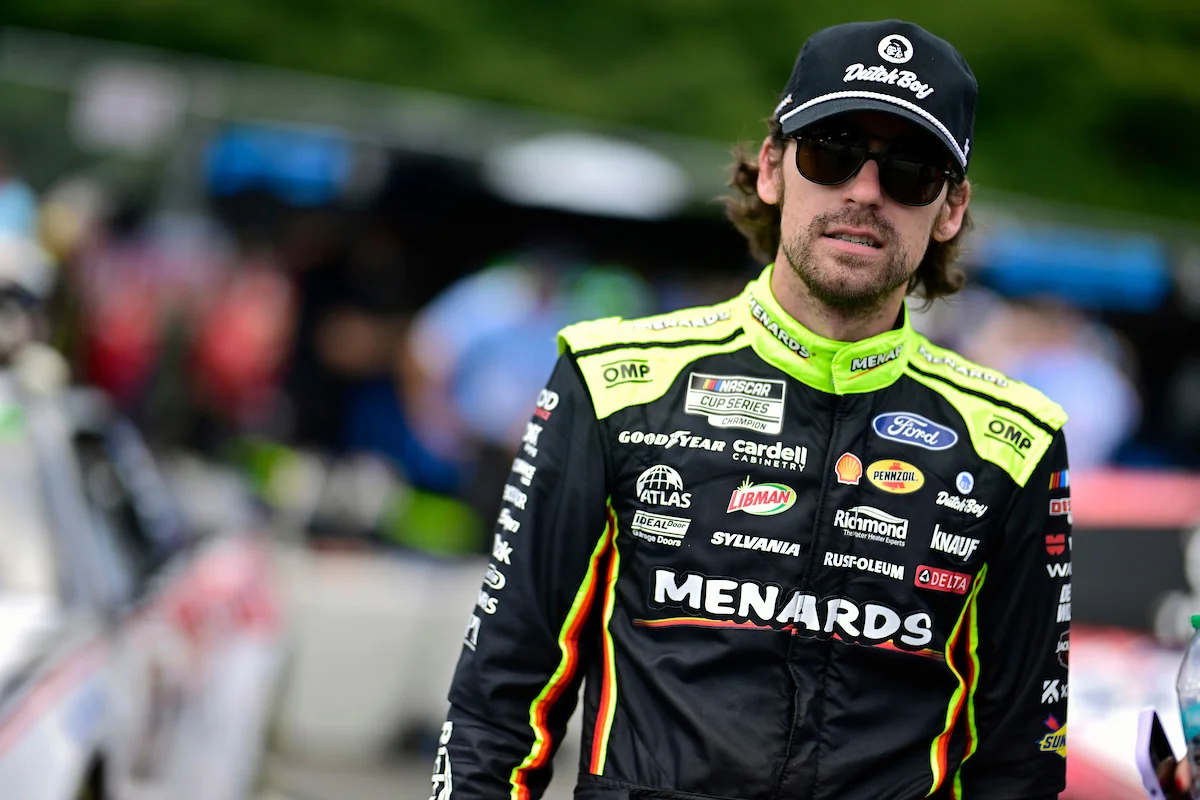
The ongoing debate in NASCAR circles is heating up over how many road course events should be included in the Cup Series, with Ryan Blaney on NASCAR road course races presenting a fresh perspective. While NASCAR veterans like Denny Hamlin and Brad Keselowski are wary of six non-oval contests, recent statements ahead of Sonoma Raceway show 2023 Cup Series champion Ryan Blaney standing firmly in favor of the current mix.
Blaney, who has achieved only one win in almost 40 road course appearances, explained his reasoning just before the Sonoma event. He finds six road course races in the 36-race Cup Series season to be an ideal figure, believing the added complexity these races bring justifies their inclusion. Despite not excelling consistently on such tracks, Blaney values the demand they place on drivers’ adaptability and racecraft, stating that a minor increase or decrease wouldn’t shift his overall enthusiasm.
We do six (races) now I think; that’s a fine number to me. Whether you go four or six or seven, I don’t really have a huge preference…I’m not the best at them but I enjoy the challenge of doing something different, whether it’s like a street course or here (Sonoma)… But if it goes down or up, it’s really not going to change the way I look at it.
Ryan Blaney said via Frontstretch Plus on YouTube.
Other Cup Series figures share similar views. Alex Bowman from Hendrick Motorsports, one of the more skilled road course competitors in the chevrolet/”>Chevrolet garage, recalls when fans were outspokenly pushing for more such races. Bowman, knowing that he benefits from these tracks, admits this influences his opinion but also defers to decision-makers.
Ten years ago, they wanted more road courses. Now, we have too many. So, I think five or six is probably a good number but there’s also people way smarter than me making that decision… Selfishly, we typically run pretty well at the road courses, so I like them.
Alex Bowman said.
This context shows a shift in fan and participant perspectives, signifying the evolving relationship NASCAR has with road course formats. While some suggest a reduction, others appreciate the increased challenge these tracks introduce, underlining how driver preferences and fan demands have fluctuated over the last decade.
Blaney Explains the Physical and Mental Demands of Modern Road Courses
Providing more insight, Ryan Blaney discussed the added rigor of contemporary road course events during a podcast appearance following the Chicago street race. For Blaney, courses like Chicago stand out for their toughness, due to the circuit’s demanding surface conditions and narrow layout. He emphasized both the physical exertion and the constant mental attention required to navigate such challenging environments.
I enjoy it. I enjoy the challenge of it. I mean, it’s tough. I think, I think Chicago is the toughest road course we go to, just because, you know, it’s people always ask me, like, what’s challenging about I’m like, well, just, you know, the roads are rough.
Ryan Blaney said.
Several factors contribute to this difficulty, including unpredictable bumps, tight corners, and intense wheel-to-wheel racing. These elements not only heighten the entertainment factor for fans but also demand more from the drivers, pushing their physical and mental thresholds. The unique attributes of the Chicago street course, compared to more traditional road tracks, make it a particular test for even the most seasoned racers.
Everything’s super rough, trying to figure out the bumps, and it’s so narrow, like there’s nowhere to bail. Like, if you kind of get in the corner too hot, smoke it in there, and you get bouncing real hard on your blocks or something, or on the shock limiters. Like, there’s no gravel trap or grass to run off to… So, it’s, like, really mentally challenging for me.
Ryan Blaney added.
Blaney’s remarks highlight a crucial consideration for schedule-makers and NASCAR leadership. As they contemplate the future of road course races, the feedback from drivers like Blaney, combined with the logistical challenges such as negotiating race deals with cities like Chicago, must guide their choices. The test at Chicago is more than just a sporting spectacle—it encapsulates the modern complexity of NASCAR’s evolving race formats.
The Broader Cup Series Road Course Debate
The landscape of NASCAR’s schedule has evolved, reflecting changes in both fan sentiments and competitive realities. Veterans like Brad Keselowski and Denny Hamlin have voiced skepticism about the number of road course inclusions, concerned that these races might overshadow NASCAR’s traditional oval heritage. However, the arguments from Blaney and Bowman suggest many drivers appreciate the diversity and skills required for success on varying track types.
Notably, this conversation extends beyond individual preferences, emphasizing the importance of balance between tradition and innovation. Road course specialists, teams in the Chevy garage, and organizations such as Hendrick Motorsports see advantages in a mix of race styles, hoping to strengthen the sport’s appeal to both loyal and newer fans.
NASCAR officials face ongoing decisions regarding contracts and city partnerships, especially as deals for races like Chicago’s street event expire. With every season, the feedback loop from drivers, fans, and teams shapes the makeup of the calendar. Maintaining six road course races, as advocated by Ryan Blaney on NASCAR road course races, could present the ideal compromise between competition and spectacle in the Cup Series.
As the season unfolds and negotiations for future events continue, the implications of these decisions will be felt by drivers, organizations, and fans alike, potentially adjusting the trajectory of NASCAR’s most prestigious series in years to come.
Our Reader’s Queries
Q. Has Ryan Blaney ever won Talladega?
A. At the Charlotte Roval race, Blaney secured eighth place, which allowed him to move on to the Round of 12. He later claimed victory at the fall race in Talladega by just 0.007 seconds over Ryan Newman. This win helped Blaney advance to the Round of 8, despite having spun out onto pit road earlier in the race.
Q. Has Ryan Blaney won at Talladega?
A. Blaney claimed victory in the Talladega fall race, narrowly beating Ryan Newman by just 0.007 seconds. This win pushed him forward to the Round of 8. Despite an early spin onto pit road, he managed to secure the win.