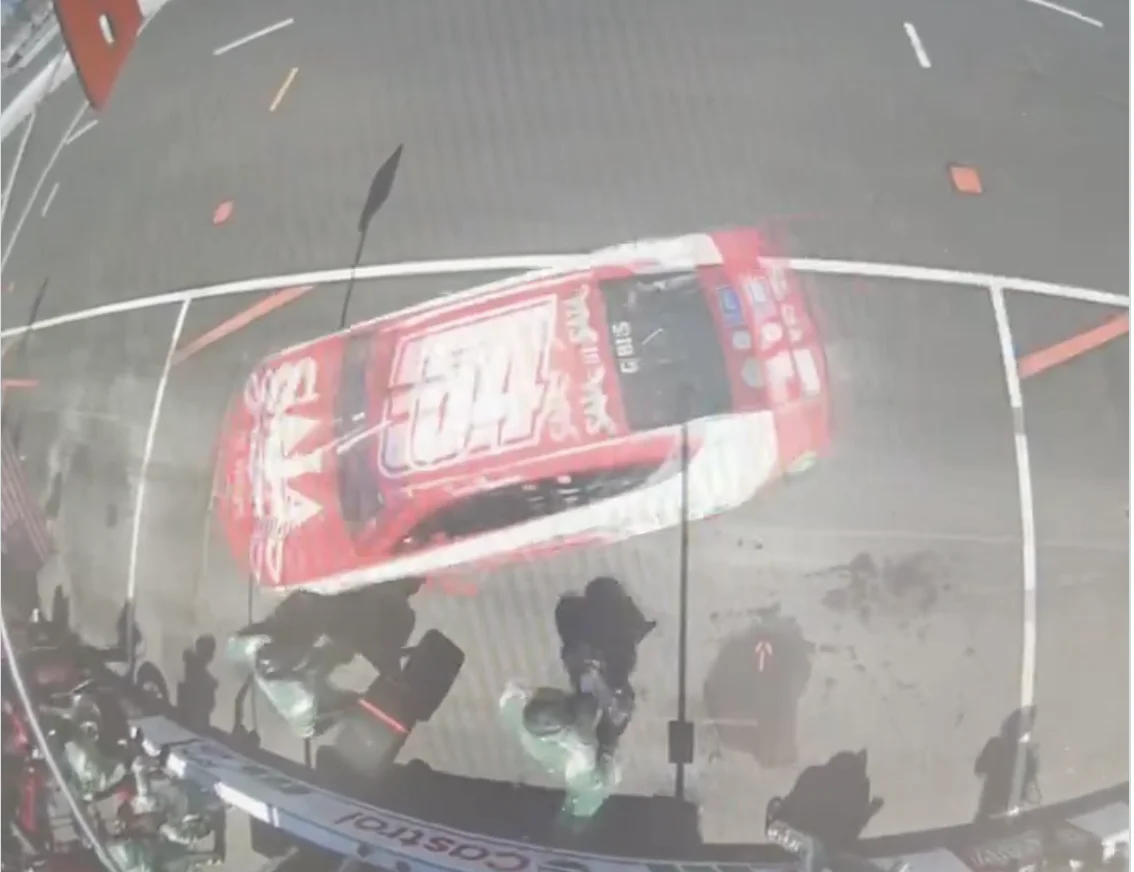
Following the toyota/”>Toyota Save/Mart 350 at Sonoma Raceway, NASCAR analysts Todd Gordon and Kyle Petty sided with officials who decided Ty Gibbs should not face penalties after a pit road incident involving Brad Keselowski’s tire carrier, igniting discussion among fans and teams. The Ty Gibbs pit road incident Sonoma has become a flashpoint, prompting debate about pit road safety and protocols during tense race moments.
Breakdown of the Sonoma Pit Road Confrontation
On Lap 52 of Sunday’s race, Ty Gibbs brought his car into the pits and passed through the pit box just ahead of his, assigned to Brad Keselowski. As Gibbs entered, Keselowski’s crew was setting up, and the tire carrier was standing with two tires positioned sideways in the box. Gibbs grazed one of the tires, causing it to spin the carrier’s wrist and resulting in a near-miss with the crew member just as he was preparing for service work on Keselowski’s car.
Immediately after both cars returned to the racetrack, tempers flared, and crew members from both teams engaged in a physical confrontation. NASCAR officials quickly intervened, and no one was reported injured. Race officials reviewed the episode, using replay footage and considering additional videos provided by Keselowski’s team, including an overhead angle.
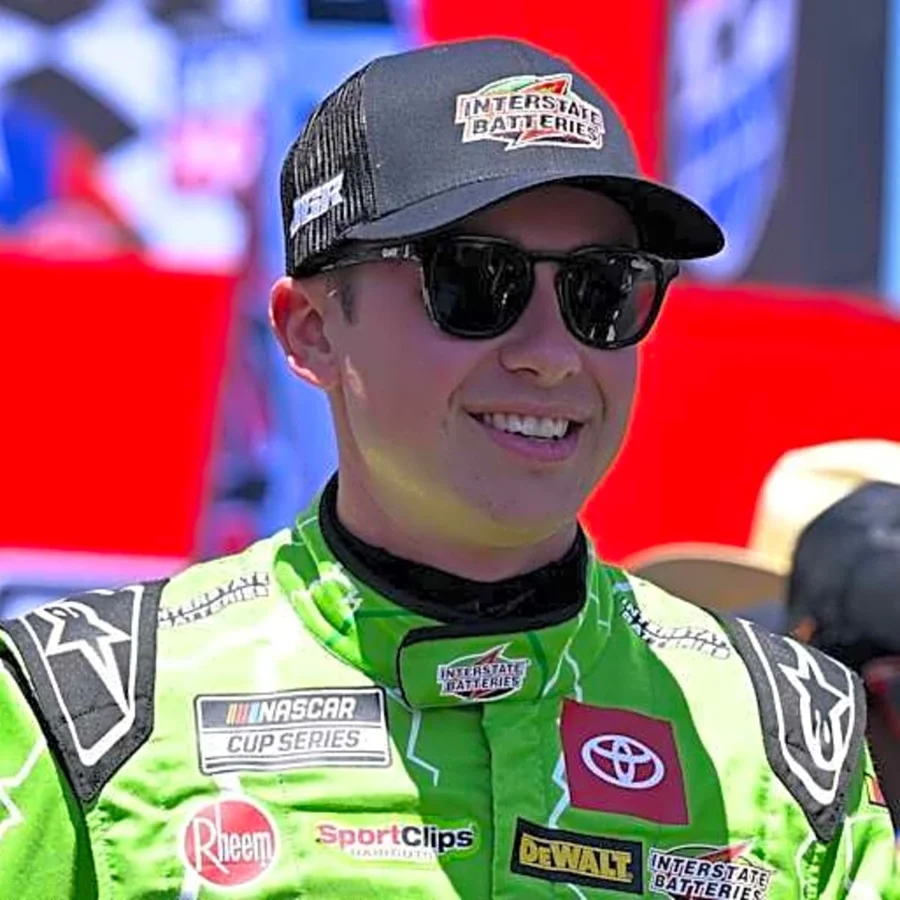
NASCAR ultimately decided against issuing penalties at the time, although officials stated they could revisit the footage and potentially impose sanctions by the following Tuesday. Despite Keselowski’s squad arguing their case, NASCAR ruled Gibbs had not committed a violation, and analysts Gordon and Petty concurred with the judgment.
Todd Gordon’s In-Depth Evaluation of the Pit Lane Situation
Todd Gordon, known for his analytical approach, dissected the critical moments in the pit lane and detailed how both the tight layout of the Sonoma pits and the positioning of crew members contributed to the near-miss. He noted that these pit boxes are especially short, requiring precision and awareness from drivers, crew members, and tire carriers alike.
“I see two cars coming to green flag pit in some of the shortest boxes we’ve got on pit road,”
—Todd Gordon, NASCAR Analyst
Gordon observed that the tire carrier, handling two tires, was standing in a way that left the equipment extending into the space Ty Gibbs needed to enter his assigned stall. Minor contact was made between Gibbs’ car and the outboard tire, which slightly disrupted the carrier’s rhythm but did not result in injury or a significant incident.
He further remarked that the tire carrier could have positioned himself differently, with more awareness of the incoming traffic, especially knowing that the car in front would be entering right as work on Keselowski’s car commenced. Gordon pointed out that pit crew members must always remain alert to oncoming cars and avoid overextending themselves into the racing lane.
“But he was standing looking down pit road and he’s two tires wide, which is half a pit box. And Ty Gibbs is trying to get in and get close to his fueler. The boxes are short, so you’ve got to kind of use up the box behind you to get yourself pointed in the right direction.”
—Todd Gordon, NASCAR Analyst
Kyle Petty Shares His Perspective and Background
Kyle Petty echoed Gordon’s assessment and brought his own experience as a former tire carrier to the table, emphasizing the challenges and nuances of pit road communication and safety. Petty highlighted how the close, nose-to-tail pit stops at Sonoma, coupled with the tight stalls, made such incidents nearly inevitable.
“When you have this short a pit box, when you have two guys coming in at the same time, coming in nose to tail, pit boxes the way they were, I think this is almost a non-story,”
—Kyle Petty, Former Tire Carrier and NASCAR Analyst
Petty explained that pushing, shoving, and chaotic movements often happen on pit road due to the high-pressure environment and the lack of space. Both the drivers and the crew members are compelled to make split-second decisions, and accidents or bumps occur frequently without necessarily warranting penalties.
“No, I don’t have an issue with what Ty did. Now, I don’t really have an issue with what the tire carrier did either because he’s a little upset. He should have maybe kept his tire out of the way.”
—Kyle Petty, NASCAR Analyst
Drawing from his days changing tires for Richard Petty’s legendary team before taking to the track as a driver himself, Petty recounted his own experiences:
“I got hit multiple times in my career as a tire carrier,”
—Kyle Petty, Former Tire Carrier and NASCAR Analyst
“And finally, (Richard Petty’s crew chief Dale) Inman told me, ‘Hey, that driver’s focused on his box. He’s focused on that sign. You stay out of his way.’ And that’s what it kind of boils down to sometimes. It was my job to stay out of that guy’s way.”
—Kyle Petty, quoting Dale Inman
Crew Dispute Viewed as Routine, Not Newsworthy by Analysts
Although the post-pit stop altercation gained attention, both Gordon and Petty treated the confrontation as a routine part of NASCAR pit road life and saw no grounds for escalation or formal penalties. Petty emphasized that despite the scuffle, there was no significant harm or performance loss, and both cars rejoined the race without delay or incident affecting their standings.
“They still had a great pit stop,”
—Kyle Petty, NASCAR Analyst
He also downplayed media attention on the confrontation, stating:
“It was just everything that we wanted to talk about was what the guys were doing, pushing and shoving on pit road. And to me, that’s a non-story, too.”
—Kyle Petty, NASCAR Analyst
Experts’ Decision Defends NASCAR’s Ruling
In the wake of the Ty Gibbs pit road incident Sonoma, seasoned voices like Gordon and Petty reinforced the view that NASCAR’s officials handled the situation appropriately and that such close calls are a natural byproduct of the sport’s pressures and configurations. Their analyses stressed the responsibilities shared by drivers and crews to navigate tight quarters safely, while also supporting the tradition of officials weighing circumstances before issuing penalties.
As the sport evolves and pit stalls remain as tight as ever at certain tracks like Sonoma Raceway, moments like these are likely to spark further conversation about safety protocols and officiating consistency. For now, the consensus from veteran insiders is that what unfolded at Sonoma was part and parcel of NASCAR’s unique challenges on pit road—a high-tension environment where quick thinking and teamwork are crucial, but not every brush or dispute warrants punitive measures.
Our Reader’s Queries
Q. Why does Ty Gibbs drive the 54?
A. In 2022, Gibbs competed full-time in the Xfinity Series, driving the No. 54 Toyota. His grandfather, Joe Gibbs, owned the team. Gibbs attracted attention with seven victories and secured a place in the playoffs. He also had the opportunity to race in the Cup Series at Pocono Raceway.
Q. Is Ty Gibbs any good?
A. Racing Insights indicates that Gibbs is among the top ten for passing, defense, and restarts on road courses this season. His average running position is 10.92, placing him fourth.
Q. Has Ty Gibbs ever won?
A. Ty Gibbs, the grandson of team owner Joe Gibbs, quickly made a name for himself in NASCAR by winning his debut race in the Xfinity Series at the Daytona Road Course in 2021. In 2022, he began competing full-time in the Xfinity Series and won the championship in his first year.
Q. How good is Ty Gibbs?
A. Ty Gibbs shares the top average finishing position of 6.0 among drivers who’ve raced twice on the Chicago Street Course in the NASCAR Cup Series. In 2023, Gibbs began in 12th place and ended up ninth. In the previous year, he started second, led for 17 laps, and finished in third place.