
Katherine Legge’s emergence in the NASCAR Cup Series is drawing comparisons to Danica Patrick NASCAR career statistics, but new numbers suggest Legge’s rookie campaign may be rewriting the history books. As Legge outpaces Patrick’s early results, the question arises: is this a turning point for women in stock car racing or another familiar tale?
Katherine Legge and Danica Patrick: Setting the Stage for Change
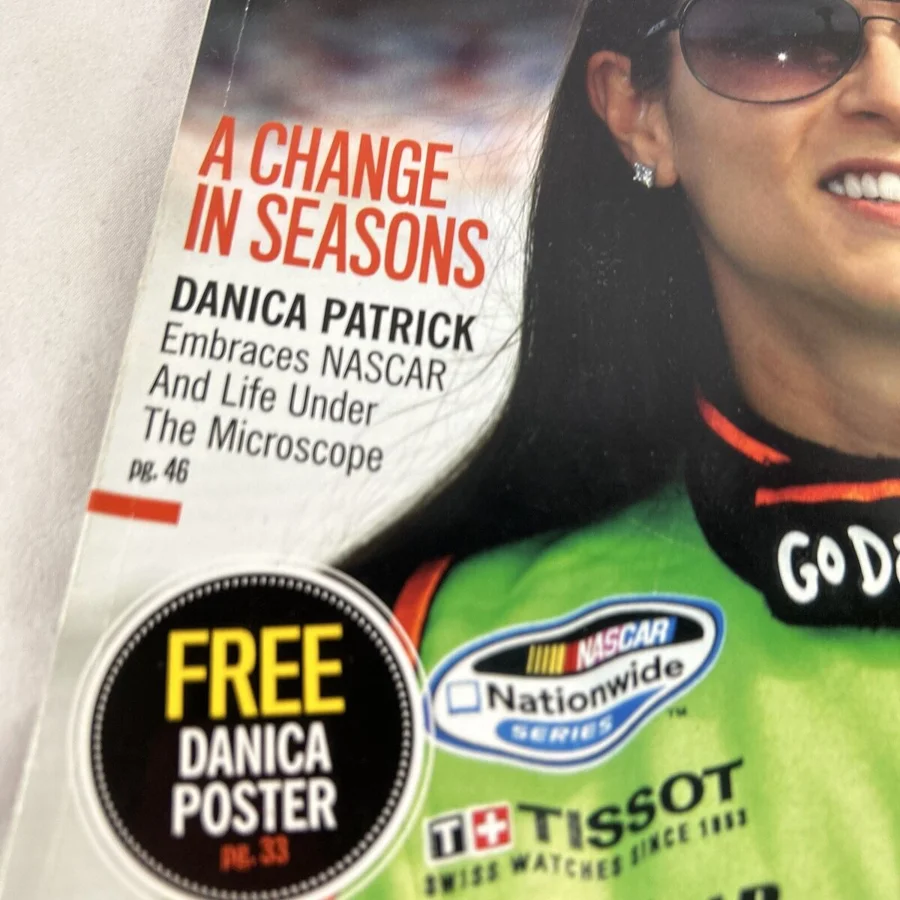
Danica Patrick captured national attention long before her NASCAR transition, rising through the IndyCar ranks with notable finishes—such as fourth at the Indy500 in 2005 and third in 2009—that established her as an open-wheel powerhouse. When Patrick made her shift to NASCAR, she faced the same challenges as any newcomer, initially competing in ARCA and the Nationwide Series. Her breakthrough moment came in 2011 with a remarkable fourth-place at Las Vegas, then the best result by a woman in NASCAR’s top national ranks. Her switch to full-time Cup action in 2013 with Stewart-Haas Racing marked the start of a new era.
Katherine Legge, a British driver with a background in Formula Atlantic and a trailblazing win in a major open-wheel North American event in 2005, forged her own extraordinary motorsports path. By 2023, she had become the fastest qualifying woman in Indy500 history and had built her reputation across endurance racing, IMSA, and IndyCar. Inspired by, but not confined to, Patrick’s legacy, Legge made her NASCAR Cup Series debut later in her career, bringing with her an eclectic and impressive skill set.

“I actually race for the same team as Danica, so we’ve sort of judged myself against her all season,”
—Katherine Legge, NASCAR Cup Series Driver
“It’s difficult. She’s been doing this series since the beginning of the year and I haven’t. So, you know, I’m going to judge myself against her just as much as I’m going to judge myself against everybody else. There’s nothing special about her or me. We’re just drivers.”
—Katherine Legge, NASCAR Cup Series Driver
Despite being compared to Danica Patrick, Legge’s numbers are painting a picture that goes beyond the typical rookie narrative.
Legge’s Debut Outpaces Past NASCAR Greats and Rival Converts
Piloting the #78 Live Fast Motorsports chevrolet/”>Chevrolet, Katherine Legge made history by becoming the first woman since Danica Patrick in 2018 to start a NASCAR Cup race when she qualified at Phoenix Raceway in March. Although her debut ended in a crash, it marked her official entry into NASCAR’s top tier. Determined, she followed with a 32nd-place result in Mexico City—famously finishing the race with a melted shoe due to cockpit heat—and completed four more starts at demanding venues like Sonoma, the Chicago Street Course, and Indianapolis.
Over her initial five Cup Series events, Legge achieved an average finish of 25.8 and an average starting position of 36.4. She secured two top-20 finishes, with only one race where she did not finish, a record that substantially surpasses expectations for a Cup rookie.
Placing Legge’s numbers beside those of NASCAR’s established champions reveals the significance of her achievement. Examining the 16 full-time Cup drivers with the lowest average finishes in their first five races—names that include champions and established Cup stars such as Kyle Busch (33.6), Joey Logano (36.0), Chase Elliott (26.2), and Austin Dillon (27.0)—Legge’s 25.8 average looks increasingly impressive. Each of those champions started with averages below Legge’s, illustrating that a rocky rookie record does not preclude later greatness in NASCAR.
“I calculated the Average Finish of every full-time Cup driver in their first 5 Cup starts and attached the 16 worst. The list contains 5 Champions, 7 Championship Four drivers and 12 winners. They all have something in common: their average was worse than Katherine Legge’s (25.8) pic.twitter.com/Il3ezt5yLi”
—Daniel Céspedes, Analyst
Compared to other high-profile open-wheel converts, Legge stands out even more. Danica Patrick, who entered NASCAR Cup action with widespread attention in 2012, averaged a 28.3 finish across her first ten races. After joining Stewart-Haas Racing for a full-time 2013 campaign, Patrick’s average dropped to just above 26, with only one top-10 finish all year and an overall season average of 30.1.
“Well, I got here by determination and believing I could. It’s that simple. And then I would say that to open it up to something that your question wasn’t exactly — I would say once you get to this level, I think we’re all talented, so then it depends on so many other circumstances, which is why you see a driver all of a sudden emerge and maybe submerge every now and again, depending on circumstances,”
—Danica Patrick, Former NASCAR Cup Series Driver
Legge’s racing strengths have been especially apparent on road courses. Her 19th-place finish on the challenging Chicago Street Course represented the first top-20 for a woman in Cup since Patrick claimed 17th at Texas in 2017. Starting with Phoenix (30th), then Mexico City (32nd), Chicago (19th), Sonoma (31st), and Indianapolis (17th), Legge proved adaptable to different types of circuits—an essential trait for sustained NASCAR success.
When viewed side by side, Patrick’s and Legge’s initial Cup Series starts reveal two distinct narratives. Patrick drew immense media traffic with headlines like her Daytona 500 pole in 2013 and a lap led en route to an eighth-place finish, but did not back up the hype with consistently strong race results. Legge, by contrast, has quietly posted slightly better numbers over her first five-race window, alongside breakthrough top-20 runs. Although neither has stood on the Cup podium, Legge’s rapid progress compares not just favorably with Patrick’s, but with debut stats of several of today’s champions.
Adapting, Learning, and Building for the Future
Sustained success in NASCAR requires more than early flashes of potential, and Legge is taking a methodical approach to growth. She knows mastering ovals will be the next big step as she taps into her deep background in open-wheel and sports car racing. Reflecting on her Cup debut at Phoenix, Legge shared her honest assessment:
“Going out there, first time, having never driven one of these before… on an oval that I have very little experience with. I have done what two oval races in a stock car now? So it’s a lot of good experience honestly.”
—Katherine Legge, NASCAR Cup Series Driver
Her immediate focus is on finishing races and keeping errors to a minimum, a philosophy she explained to SiriusXM NASCAR Radio:
“Finishing all of the laps… minimizing mistakes,”
—Katherine Legge, NASCAR Cup Series Driver
As she seeks consistency race after race, Legge is guided by the strong examples and advice of her peers. She specifically admires the adaptability of Kyle Larson, seeing his multi-series versatility as an ideal:
“I saw him drive at the Chili Bowl, and I’m like, ‘You are my hero.’… If you have his level of natural ability and you work at it, then you’re special.”
—Katherine Legge, NASCAR Cup Series Driver
Friendships with fellow drivers such as AJ Allmendinger have given Legge valuable insights into the nuances of NASCAR team dynamics and culture, further smoothing her transition from open-wheel to stock car racing.
Mentorship has also played a pivotal role in Legge’s adjustment. She draws on race-day input from experienced Cup veterans, listens closely to feedback, and has made track-specific preparation a part of her weekly routine:
“It was something that I felt incredibly passionate about doing. I have so much fun doing it and am so motivated. I’m working hard at it. I really want to make this home.”
—Katherine Legge, NASCAR Cup Series Driver
With every race completed, Legge absorbs the lessons of pit strategy, adapts to high-speed drafts, and learns how to avoid the pitfalls that can trap fresh entrants to the Cup series. Her evident passion and openness to learning are contributing to her rise, offering a roadmap for others who hope to follow.
Implications for NASCAR and Women in Racing
Katherine Legge’s impressive rookie numbers stand as a testament to both her skill and the changing landscape of NASCAR. In outshining Danica Patrick’s initial Cup results—long considered the benchmark for female drivers at this level—Legge is quietly, yet powerfully, shifting perceptions within the sport. Her adaptability and tenacity illuminate a new path for talented women looking to break into the NASCAR Cup Series.
This evolving trend brings hope to fans and aspiring racers alike. Should Legge’s upward trajectory continue, she could help further erode longstanding stereotypes and open doors for more women to join the Cup field. And as her career unfolds, the spotlight will not just be on whether she wins races, but also on how she transforms expectations and expands possibilities within one of America’s most storied sports arenas.

