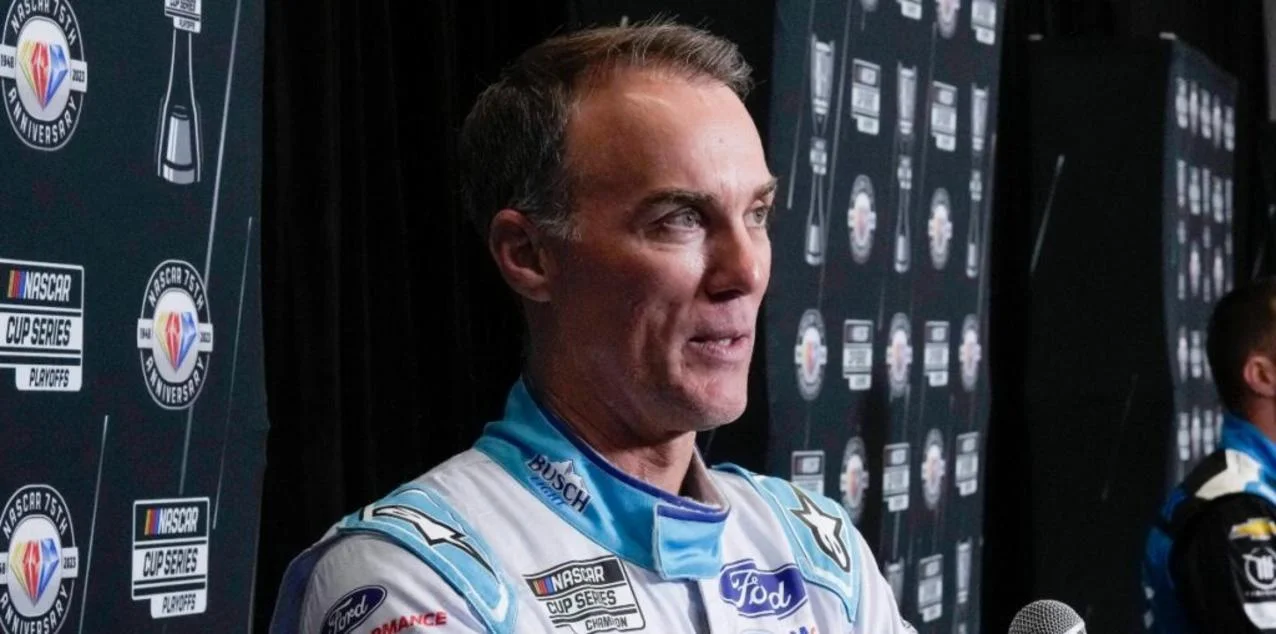
Kevin Harvick on NASCAR safety regulations has taken center stage after Stewart Friesen‘s alarming crash a little over a week ago, which left Friesen hospitalized with serious injuries. The incident, occurring during a race, resulted in a broken pelvis and a fractured right leg for Friesen, underscoring just how dangerous motorsports can be.
Friesen’s accident did not just startle fans—it sent a jolt through the entire racing community, serving as a stark reminder of ever-present risks. Many believe the outcome could have been far more tragic if not for existing safety measures.
Harvick Reflects on the Dangers and Importance of Regulation
Veteran driver Kevin Harvick discussed the crash and the state of racing safety on his podcast following the incident, expressing horror at what unfolded and relief that the situation was not fatal.
“This is just an absolutely horrifying wreck right here,”
—Kevin Harvick, Kevin Harvick’s Happy Hour podcast
“You see him just hit the end of that wall and then hit by cars and fires. Just glad that he’s not in worse condition than he is. It was a tough couple weeks for dirt racing with everything that happened at Eldora with the sprint cars. And then you have Friesen’s wreck right here. So glad everybody’s still here.”
—Kevin Harvick, Kevin Harvick’s Happy Hour podcast
Since the crash, Friesen has been transferred to a hospital in New York, where he awaits several surgeries. His wife has been sharing updates throughout the ordeal, offering some reassurance to concerned fans and fellow drivers.
Calls for Consistent Safety Oversight Beyond Major Series
Harvick and others now stress the critical need for rigorous safety rules and ongoing investigations into each accident—a standard he credits NASCAR for upholding diligently but finds lacking in other racing series.
“These series don’t have the investigations and things, and that’s one thing NASCAR does a really good job at, is making sure they understand each wreck,”
—Kevin Harvick, Kevin Harvick’s Happy Hour podcast
“Making sure that they look at all the equipment. They hold the people accountable to wear their equipment right, to get their headrests right. That doesn’t happen in the short track world. Some of the stuff you see is pretty scary.”
—Kevin Harvick, Kevin Harvick’s Happy Hour podcast
He emphasized that smaller dirt and short track organizations may lack the rigorous attention to detail seen in NASCAR, which can expose drivers to avoidable risks. The recent events in dirt racing, including those at the Eldora Speedway, have prompted further debate over whether enough is being done at all levels of the sport.
Responsibility Across Teams and Individuals
Enforcing safe practices is not only the job of racing organizations like NASCAR or local circuits. Harvick points to the crucial roles that crew chiefs, team owners, and drivers themselves play in maintaining high safety standards every time a car hits the track.
“And that’s one thing I stress to all of our young guys and just people in general that just get a little lax about it from the safety side,”
—Kevin Harvick, Kevin Harvick’s Happy Hour podcast
He argues that preparation must be thorough and ongoing—not just for routine races, but for unforeseeable, potentially catastrophic situations such as what happened to Friesen.
“So it’s super important that all that stuff is right and you evolve with the safety aspect of it. That’s the difference between weekly racing and Cup, Xfinity, Truck racing … that NASCAR holds you accountable. Not so much the case on stuff like this.”
—Kevin Harvick, Kevin Harvick’s Happy Hour podcast
A Cautionary Tale for the Racing Community
For many, Friesen’s crash serves as a wake-up call to smaller racing series and their participants to take safety far more seriously. The gravity of the incident has forced everyone involved to reconsider their responsibilities and protocols to avoid more severe consequences in the future. With the conversation reignited by prominent voices like Harvick, there is renewed scrutiny on how different levels of motorsport police safety and enforce the essential regulations needed to protect drivers’ lives.