
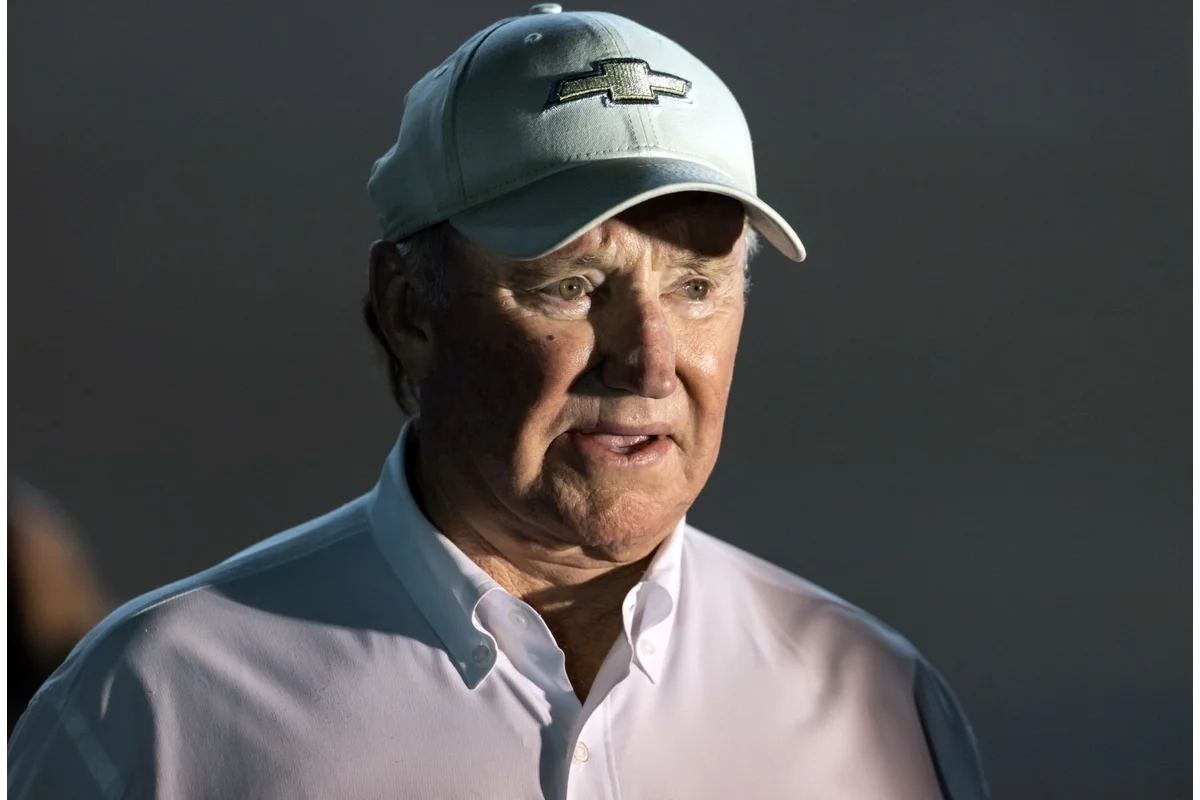
The controversy surrounding NASCAR bias against Richard Childress has resurfaced following the leak of internal messages during a high-profile lawsuit involving 23XI Racing and Front Row Motorsports. With Childress now considering legal action over disparaging comments revealed in official depositions, longstanding concerns about systemic inequalities in the sport have come sharply back into focus.
Historic Legacy Collides with New Controversy
Richard Childress, who began his racing journey as an unknown Southerner from Winston-Salem in 1969, has built a reputation over more than five decades as a central figure in NASCAR. Growing from humble beginnings at Talladega to eventually joining the ranks of Hall of Famers, Childress transformed himself into a Cup champion, successful team owner, and an enduring influence within the sport. After hundreds of starts and decades spent shaping one of NASCAR’s most successful organizations, Childress’s status has evolved from participant to one of the sport’s defining pillars.
The emergence of leaked communications in the ongoing antitrust proceedings involving 23XI Racing, Front Row Motorsports, and NASCAR has thrust Childress back into the spotlight. The personal nature of the remarks, and the subsequent aftermath, have turned this latest dispute from a mere legal confrontation into a critical examination of NASCAR’s culture and leadership.
Unfiltered Remarks Amplify Old Wounds
Among the documents revealed in pre-trial discovery was a particularly inflammatory exchange between NASCAR President Steve Phelps and Chief Media & Revenue Officer Brian Herbst in 2023.
“(Richard) Childress needs to be taken out back and flogged. He’s a stupid redneck who owes his entire fortune to NASCAR.”
– Steve Phelps, NASCAR President
Phelps did not hold back, further describing Childress as both a “dinosaur” and a “malcontent.” The exposure of these comments sent a strong current of shock and anger through the NASCAR world, particularly as the sport already wrestled with long-standing concerns about impartiality and personal animosity among its senior officials.
Reexamining the Bowyer Penalty: Claims of Inconsistent Enforcement
These tensions have revived scrutiny of previous controversies, notably the incident involving Clint Bowyer and Richard Childress Racing (RCR) in the 2009 season. The consequences and approach taken by NASCAR during this period became a focal point for those alleging disparate treatment.
During the 2009 Dover Chase race, both Jimmie Johnson and Mark Martin saw their cars transported to the technical center for thorough inspection after finishing first and second. Shortly after, in a different event at New Hampshire, Bowyer’s No. 33 Chevrolet—having cleared all on-site postrace checks—was subjected to additional analysis. Results eventually claimed that the car’s body did not fit its chassis precisely, despite passing trackside scrutiny.
In response, NASCAR issued a severe penalty: Bowyer and Richard Childress lost 150 points each, crew chief Shane Wilson received a $150,000 fine and a six-race suspension, and car chief Chad Haney faced the same suspension. These stringent actions contrasted sharply with what unfolded for Johnson and Martin. Mark Martin’s car just barely met the regulatory limit on rear offset, while the measurements on Johnson’s car showed a minor infraction—0.006 inches beyond the allowable tolerance, a difference approximately equalling two thin sheets of paper. Nevertheless, Johnson received no penalty, a decision that intensified discussions about equal enforcement of the rules.
At the time, Bowyer’s setback was particularly painful, as he had just qualified last for the Chase, surged to a commanding second-place position after leading a large portion of the race, only to see his achievement eclipsed by the punitive ruling. In contrast, Johnson, whose infraction mirrored Bowyer’s, was allowed to continue his season, ultimately capturing his fourth Cup Series championship. This perceived double standard added fuel to speculation about favoritism and selective treatment among the sport’s top teams and personalities.
Ongoing Scrutiny and Patterns of Discipline
The Richmond race later in 2009, where Bowyer’s No. 33 RCR Chevrolet (chassis 303, also used at Charlotte, NHMS, and Bristol) was impounded following suspicion by officials, further deepened the perception that RCR endured harsher scrutiny. The technical staff at RCR, including Childress and his engineers, were subject to intensive questioning and review. While the organization’s willingness to operate at the edge of the rulebook was acknowledged by some, it became evident that enforcement was far from uniform.
Past incidents saw NASCAR present its policies as uncompromising, particularly after the debut of the new car, where it stated zero-tolerance protocols would be maintained—standards that had previously been used to penalize crew chiefs Chad Knaus and Steve Letarte at Sonoma in 2007. However, the handling of Johnson’s car in the 2009 inspection process did not appear to align with these strict precedents. Many in the racing community interpreted this as evidence of a system in which team reputation, relationships, or perceived value to the sport may influence disciplinary outcomes.
A crew chief such as Chad Knaus might find inspection at the official technical center to be an expected procedure, but for Shane Wilson, the impact was career-altering. Observers both inside and outside NASCAR, including many loyal to Kyle Busch, have regularly cited such incidents in arguing that Richard Childress and his affiliates repeatedly faced unequal treatment, despite their lasting influence in shaping the sport’s competitive landscape.
The Unfolding Impact and What Lies Ahead
The renewed controversy generated by leaked leadership messages has reignited debate about NASCAR bias against Richard Childress and his teams, underscoring unresolved issues related to governance, fairness, and the treatment of foundational figures. With legal actions reportedly in consideration and scrutiny intensifying on both current procedures and historical decisions, the sport is being pressured to confront its practices and address growing concerns from its own community. As these investigations and discussions continue, the significance stretches beyond any single penalty, touching fundamental questions about equality and credibility at the heart of NASCAR.
Interesting article from 2010 about Childress’s team potentially being treated harsher. At New Hampshire in the chase, Bowyer’s car had some issues in the rear end, they got penalized 150pts, but a similar violation the year prior for another car wasn’t as harsh. Thought this was… https://t.co/cgDjTuodb3 pic.twitter.com/jb9opDw8Pj
— mario (@LostSchemes) November 25, 2025

