Kyle Busch has openly acknowledged his significant difficulties during the Next-Gen NASCAR era, highlighting that he has not adapted as successfully as his competitors since the new car’s introduction in 2021. With Kyle Busch Next-Gen struggles now in focus, both he and others in the NASCAR community reveal just how much the sport’s latest changes have impacted one of its most accomplished drivers.
Changing Landscape: How the Next-Gen Car Altered NASCAR Competition
The launch of the Next-Gen car in 2021 was aimed at creating a more level playing field across NASCAR Cup Series teams, hoping to produce closer races and fresh opportunities for drivers and organizations. This era quickly saw drivers such as Joey Logano, Kyle Larson, Ryan Blaney, William Byron, Chase Elliott, Denny Hamlin, and Christopher Bell taking control of the series, often appearing at the front of the field and collecting impressive win counts.
In stark contrast, Kyle Busch, a two-time Cup Series champion and former dominant force, has only managed four wins with the new car—a single victory with Joe Gibbs Racing in 2021 and three more with Richard Childress Racing (RCR) during his debut season. His performance has noticeably slipped, and since 2023, he has not found himself in victory lane. Busch admits that only one of those wins was the result of genuine race pace, while the others came thanks to fortunate events late in the races.
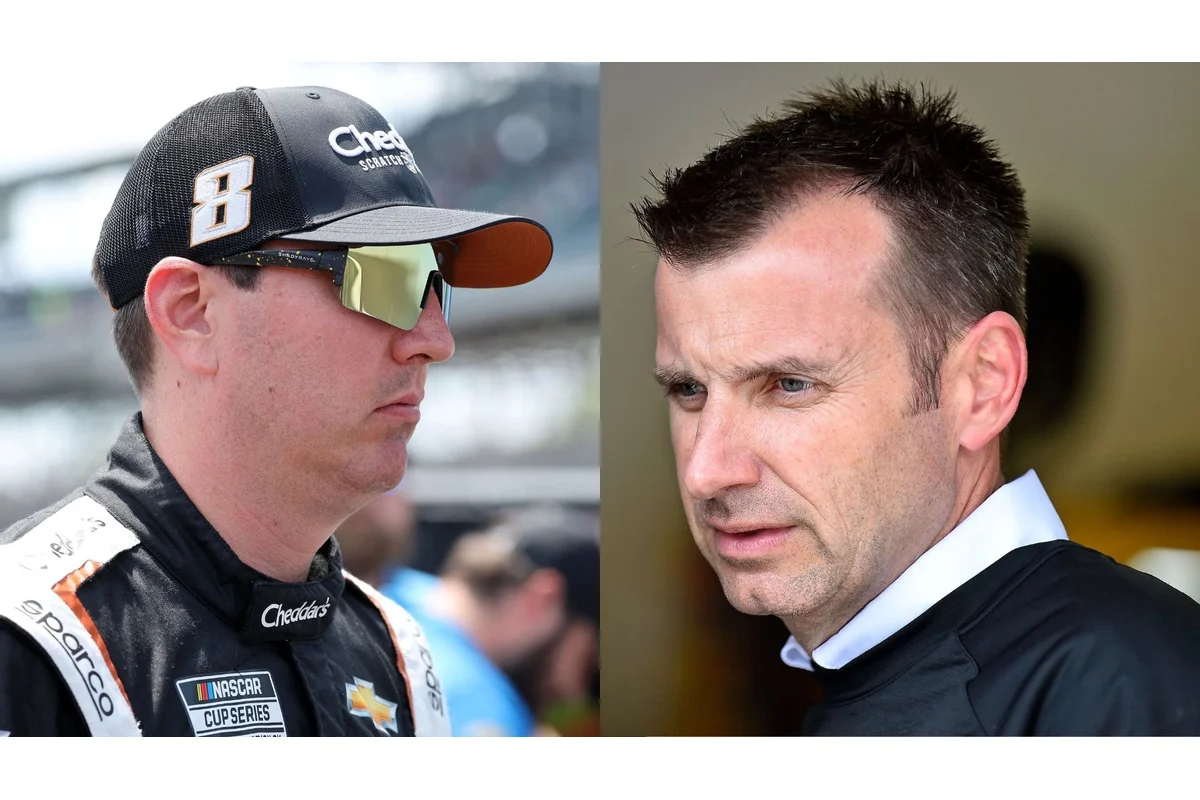
Kyle Busch Reflects on the Drivers Most Impacted by Next-Gen Changes
Recently, Busch, now piloting the No. 8 Chevrolet, was asked which drivers have been helped or hindered the most by NASCAR’s technical overhaul. He named Ryan Blaney and William Byron as those who have benefitted most from the Next-Gen shift, saying their results have clearly improved. He characterized himself as the driver who has suffered the biggest setback, stressing that those who previously competed at his level are now finding greater and more consistent success.
“Who has it benefited the most? I think that’s hard to say. It’s not all driver. It’s the crew chief, engineering, the shop. It’s everything. But I would say [Ryan] Blaney, [William] Bryon, those guys have probably benefited the most. The ones I would say it hasn’t really changed a whole lot for, they’re still just as successful as they were before, would be Denny, Christopher [Bell]. And the ones you would say arguably have hurt the most have been me.”
Kyle Busch said via racer.com.
His observations underline a drastic shift at the top of the Cup Series. While competitors like Denny Hamlin and Christopher Bell continue to run up front, Busch has openly struggled to replicate his past prowess. The changes introduced with the Next-Gen car have not only altered driving dynamics but have also forced even the sport’s most talented racers to rethink their approach.
Practice Limitations and Team Transitions Hinder Busch’s Progress
Further discussing his struggles, Busch directly cited the lack of practice as a major obstacle to performance. The 2021 season, heavily affected by pandemic protocols, saw little to no on-track practice. Busch noted that this limited preparation time hampered his ability to familiarize himself with the new car and adjust his style effectively. The lingering effects of that abrupt transition, combined with RCR’s ongoing battles to provide consistently fast machinery, have continued to make adaptation challenging for the veteran driver.
“I would say practice is probably a key to that. If you look back to my last year with Adam [Stevens, at Joe Gibbs Racing], we didn’t have practice; it was COVID time. So, we had zero practice, lined up and raced, and we only won one race in the era. It was coming from the shop and being (good) right out of the gate.”
Kyle Busch added.
The transition to RCR marked a new chapter for Busch, but the resources and vehicle performance haven’t matched his previous experiences with Joe Gibbs Racing. As a result, other drivers—such as Ryan Blaney and William Byron—have surged ahead, making the most of their respective teams’ adaptability and support staff, including crew chiefs and engineers. Meanwhile, Busch has found himself working harder just to close the gap, let alone reclaim his former dominance.
Kyle Larson Agrees: Busch Has Suffered Most in the Current Era
Asked to weigh in on the same topic, reigning Cup Series champion Kyle Larson echoed Busch’s thoughts, firmly stating that the Next-Gen changes have had a more profound negative effect on Busch than on any other top-level driver. Larson agreed that William Byron and Ryan Blaney have made the biggest strides forward, but stressed that differences in equipment and subtle changes in driving techniques remain crucial in determining who ultimately succeeds.
“The easy answer is to say it’s hurt Kyle Busch the most, but he’s gone to another team since then. I guess he got the one year at Gibbs, but I would say it’s hurt him the worst. I would say it’s benefited a William Byron, a Ryan Blaney, for sure and again, all that could be circumstantial. But it is a little bit different driving technique. But it’s still a race car, and it’s still a stock car on a pavement track where your equipment has to be good.”
Kyle Larson said.
Larson’s perspective supports the wider sentiment within the NASCAR garage: evolving engineering, team structure, and even pandemic-driven restrictions have shifted the competitive balance, and not all drivers have adapted at the same rate. The combination of fresh technical regulations and resource allocation has allowed some athletes to rise while others, even established champions, have faced setbacks.
Outlook for Kyle Busch and Richard Childress Racing
There remains a sense of anticipation among fans, insiders, and drivers like Denny Hamlin and Christopher Bell to see whether Kyle Busch can overcome his ongoing Next-Gen struggles. The broader NASCAR community is closely watching to see if Richard Childress Racing can deliver the performance upgrades needed for their star driver. After years of top-tier results, expectations are high for Busch to return to victory lane, but the reality of stiffer competition and rapidly shifting technology remains a formidable challenge. As the series continues to evolve, the struggle faced by iconic drivers like Busch serves as a reminder that adaptability and strong support systems are more essential than ever in modern NASCAR.