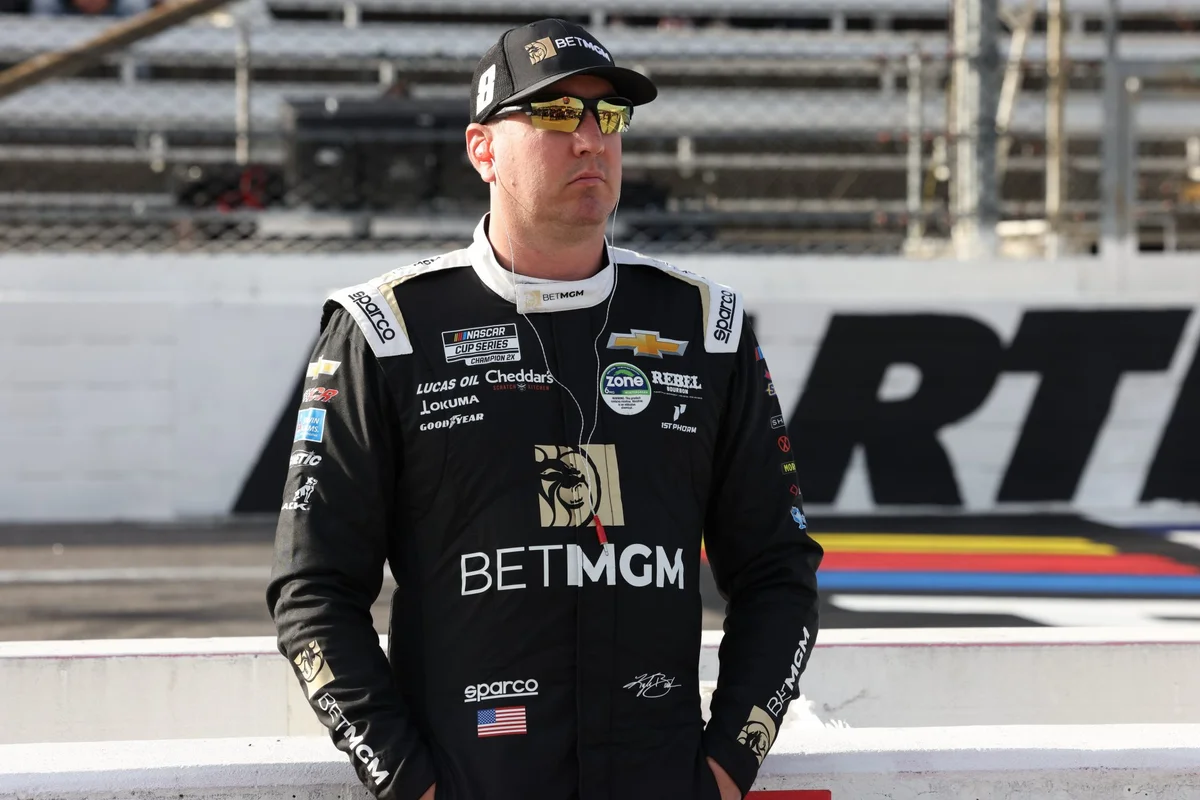
During his prime, Kyle Busch became one of the most polarizing figures in NASCAR, dividing fans while steadily earning his place among the greatest NASCAR Cup Series drivers. Whether at Richmond Raceway, Texas Motor Speedway, or under the lights of another iconic venue, his relentless drive and controversial moments solidified his reputation as both villain and legend.
Busch’s Infamous Early Years and Rise to the Cup Series
Kyle Busch’s journey to the top tier of NASCAR came with no shortage of drama or achievement. Many fans point to the 2008 incident at Richmond Raceway, when Busch spun Dale Earnhardt Jr. during a heated battle for victory, as a turning point in their perception of him. Others recall the 2011 Texas Motor Speedway Truck Series race, when he collided with Ron Hornaday Jr. under caution, intensifying his image as NASCAR’s most notorious competitor.
This animosity didn’t stem only from a few high-profile crashes. Busch regularly stepped down to compete in lower NASCAR series throughout his Cup schedule, often capturing races from up-and-coming drivers who desperately needed those wins to launch their careers. Despite these controversies, Busch leaned into the role of “villain.” He became known for never holding back with his words and, after each win, delivering a taunting bow to the crowd—whether they cheered or booed.
Kyle Busch’s Winning Legacy Across All Levels
Kyle Busch boasts an unmatched 232 career victories spanning NASCAR’s three national series, a record unmatched by any driver across the sport’s history. Critics sometimes try to downplay this record, noting that 63 wins came at the Cup Series level, but context matters—many of his national series wins were earned in fields stacked with Cup-caliber talent. Compared to earlier generations, many of the races Busch dominated were as competitive as those that legends Richard Petty and David Pearson faced in the premier division.
Strictly evaluating the Cup Series, Busch finds a place among the sport’s elite—landing at No. 7 in some all-time rankings. His journey began at a remarkably young age; he first appeared in the Truck Series before NASCAR raised the minimum age to 18, prompted by tobacco sponsorship rules. By the time he was 20, Busch had secured a Cup Series ride with Hendrick Motorsports, rapidly building his reputation as a fierce competitor.
Pivotal Wins and Championship Triumphs
Busch’s breakout moment in the Cup Series arrived in late 2005, when he became the youngest winner in history at Auto Club Speedway. Soon after, his move to Joe Gibbs Racing in 2008 marked another turning point. That season, Busch captured eight wins and led the standings for much of the year, cementing his status as a superstar driver. Despite this, the late 2000s and early 2010s saw him consistently fall short during the crucial playoff “Chase,” with a Cup championship eluding him for a time.
The narrative shifted dramatically in 2015. After missing 11 races due to a significant leg injury, Busch returned to win five races—including the all-important season finale—and finally secured his long-sought championship. This accomplishment launched a dominant stretch; between 2015 and 2019, Busch collected two championships and racked up 27 wins. Among those victories, his 2018 duel with Kyle Larson at Chicagoland Speedway stands out, where Busch muscled his way to a controversial triumph.
Legacy as Both Villain and Icon
Kyle Busch’s unapologetic personality contributed as much to his legend as his on-track feats. After a heated win at Chicagoland, Busch famously addressed critics by saying:
“If you don’t like that kind of racing, don’t even watch.”
—Kyle Busch
His bold remarks and signature celebrations, including playful bows and mocking gestures to booing fans, only fueled the drama around his career. The jeering crowd became part of his theater, yet his dominance and grit were undeniable. While Busch’s brashness often divided the fanbase, his achievements and consistent performances secured him a place among NASCAR’s most celebrated figures.
Today, as fans reflect on Busch’s storied journey through teams like Joe Gibbs Racing and Hendrick Motorsports and unforgettable moments at tracks including Chicagoland Speedway and Auto Club Speedway, his inclusion among the greatest NASCAR Cup Series drivers feels certain. History is likely to be kinder to his memory, remembering both the controversy and the brilliance of his contributions to motorsports.