
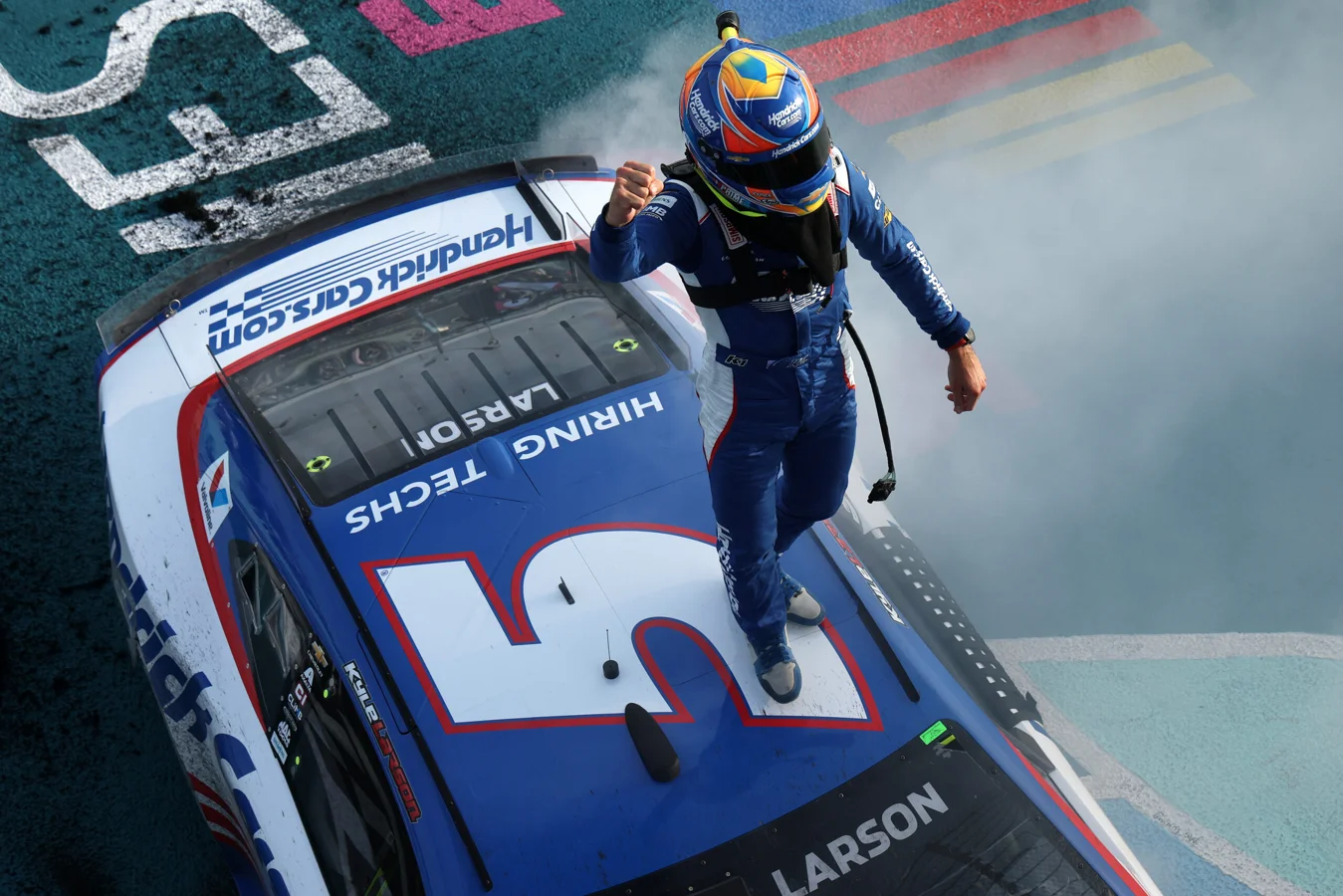
Kyle Larson is making his dirt racing return just days after clinching his third NASCAR Cup Series championship in Phoenix, marking a quick transition from the national spotlight back to his roots. Larson is set to compete at the Hangtown 100 at Placerville Speedway in California, bringing the focus keyword, “Kyle Larson dirt racing return,” to the forefront as he embarks on a demanding nine-race USAC stint across California and Arizona.
Larson’s Deep Connection to Placerville Speedway
Placerville Speedway holds significant personal history for Larson, having shaped his formative racing years. As a teenager, he spent countless hours at the track, with his parents working the pit gate and the local racing community serving as his proving ground. Now, Larson enters the venue not only as a two-time NASCAR Cup Series champion but also as co-promoter for the Hangtown 100 event, demonstrating his ongoing commitment to the place that launched his career.
“It’s really special to me to be part of an event that means so much to me. Placerville Speedway is a place where my family and I grew up going to, not as fans, but to race. Larson told Floracing. Teaming up with Scott and Kami to continue growing this event is incredibly important to me, and I’m excited to not only help promote, but also to compete.”
– Kyle Larson, Driver, Co-Promoter
Scott Russell, serving alongside Larson as co-promoter, echoed the significance of their partnership and the event’s evolution.
“We are excited to continue growing the Hangtown 100 and working with Kyle Larson to make that happen,”
commented Scott Russell, Placerville Speedway Co-Promoter. He also gave credit to a key founder, stating,
“Matt Wood had the original vision of getting the Hangtown 100 going, and I want to thank him for making it possible, because without Matt, it wouldn’t have even happened. Moving into the future, he is allowing us to take things over by partnering with Kyle.”
– Scott Russell, Placerville Speedway Co-Promoter
The Hangtown 100: Demanding Racing on a Tight Circuit
The Hangtown 100 is conducted under the USAC National Midget ruleset, making quick reflexes and adaptability essential for any hopeful winner. Racers will tackle a compact quarter-mile dirt oval that rewards aggressive tactics, as limited space leaves little room for error during the grueling hundred-lap feature.
This form of short track dirt racing emphasizes clean lines at corner entry, strong exits for maximum speed, and the need to continually read a surface that evolves rapidly with each lap. The ever-changing track – marked by emerging ruts and a diminishing cushion – means that drivers must be ready to adjust their approach with every pass across the start-finish line. Early track position becomes a major advantage, as it helps competitors protect their tires and steer clear of traffic.
The field attracts a diverse mix of talent. Ty Gibbs is taking on select West Coast races to broaden his skill set in the offseason, while Corey Day, a standout young sprint car competitor from the region, is also set to participate. These drivers, along with others in the field, are constantly analyzing the shifting dirt conditions and making split-second decisions – crucial skills in USAC midget racing, which highly values both precision and adaptability.
Why Kyle Larson Keeps Coming Back to Dirt Tracks
Larson’s busy schedule each year stands out, with his 2025 plan packed with 38 NASCAR Cup starts. His willingness to dive back into dirt competition after such a demanding season highlights a larger motorsport philosophy now gaining traction: the belief that versatility breeds stronger, sharper racers.
Manufacturers like chevrolet/”>Chevrolet and toyota/”>Toyota now encourage their rising stars to enter several types of races, spanning both pavement and dirt surfaces. The goal is to develop quick reflexes and broad vehicle control, with every type of track teaching unique skills required for success at the highest levels.
Younger drivers are embracing this philosophy, too. Connor Zilisch and Brent Crews split their time between pavement and dirt events, pushing their limits on road courses, short ovals, and gritty dirt tracks. Through these efforts, they work to refine control under dynamic conditions—managing wheel hop under hard braking and reacting swiftly to fast weight transfers—so that when they return to their main event series, they are even more competitive and adaptable.
With Larson’s successful transition from dirt prodigy to multi-time NASCAR Cup champion, and now back to his roots as both competitor and promoter, drivers and fans alike see a path to racing excellence that values diversity of experience above all. The Hangtown 100, already iconic for its intense action, will now gain further prominence as a proving ground for the next generation of motorsports talent, all while celebrating the traditions and local connections that set dirt racing apart.
As the USAC tour gets underway, attention turns to how Larson will fare on his return to the dirt, how Ty Gibbs and Corey Day will adapt, and what new lessons the tight, unyielding circuit at Placerville Speedway will teach the next wave of racing hopefuls.

