
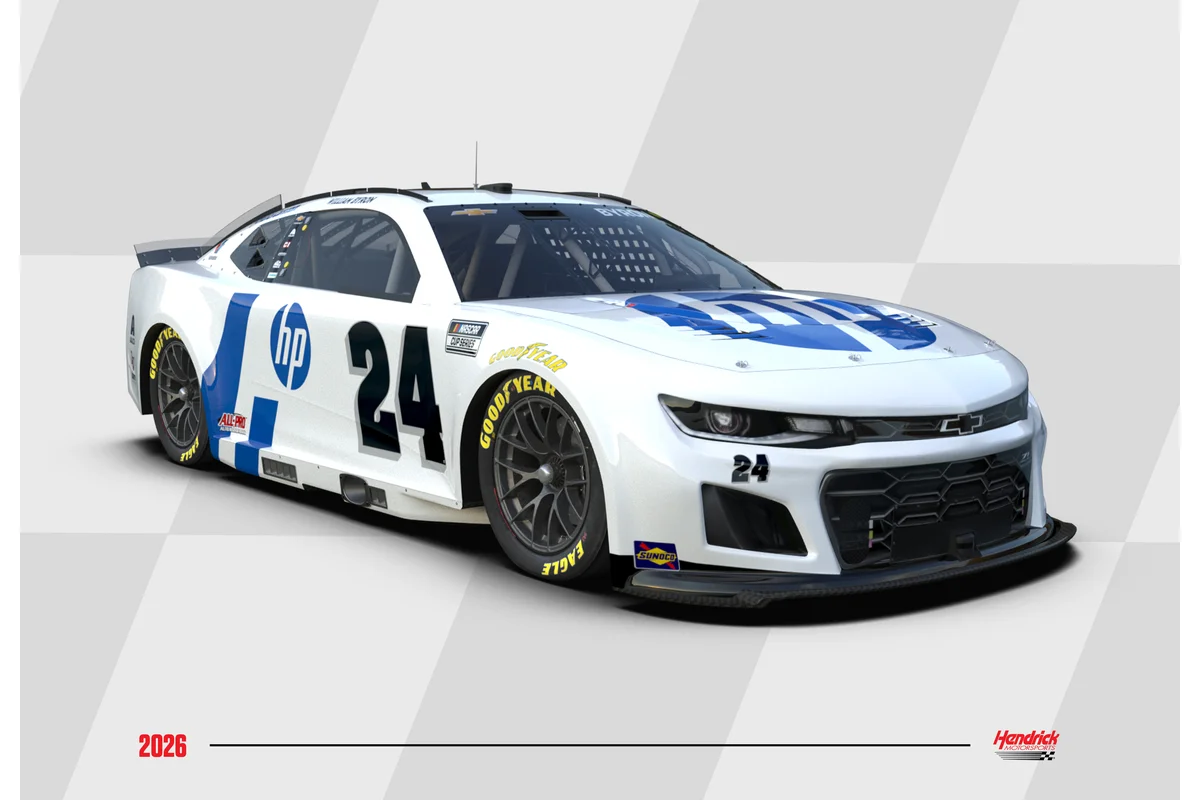
In a move that’s stirring whispers across the motorsport world, Rick Hendrick and Chevrolet have rolled out a dramatically revamped Camaro for the 2026 NASCAR season, prompting fans and rivals to wonder if a new line has been crossed in racing innovation. The Rick Hendrick NASCAR Chevy, already the centerpiece of Kyle Larson’s 2025 championship, now boasts major technical upgrades that are provoking questions about competitive fairness and regulation boundaries.
A Closer Look at Hendrick’s Aggressive Overhaul for 2026
The final race of the 2025 NASCAR Cup Series at Bristol Motor Speedway saw Rick Hendrick’s driver, Kyle Larson, carve his legacy with a performance few could match, supported by Chevrolet’s iconic Camaro ZL1. Heading into 2026, insiders are raising eyebrows at an even more significant transformation, as Chevrolet unveils a Next Gen Cup car that is almost entirely reimagined beneath its familiar exterior.
Connor Zilisch, a new full-time Cup driver for Hendrick Motorsports, teased the 2026 Camaro’s secrets on social media, drawing widespread attention. Unlike prior years that saw minor body tweaks and adjustments, Chevrolet has executed a total reconstruction, meticulously reworking each panel and surface to deliver what is described as the most extensive redesign since the Next Gen platform’s introduction.
The urgency behind these modifications is clear: after the 2025 season, Chevy engineers targeted improvements in aerodynamic performance, eager to reclaim lost ground to Ford and Toyota following NASCAR’s cooling and underbody rule changes for short tracks. The stakes for both competition and reputation are exceptionally high.
Redefining Aerodynamics: Hood Louvers, Rocker Zones, and Rear Innovations
The transformation of the 2026 Camaro is led by a dramatic revision in the car’s front end. Larger, more pronounced hood louvers—similar to those found on recent iterations of the Mustang and Camry—signal a new era of balancing front downforce with critical airflow for engine cooling. Dr. Eric Warren of General Motors outlined the engineering philosophy:
“Now it’s a little bit the opposite, you actually want the back down and the front up just to get airflow under the car the right way,”
he said, describing the delicate interplay between aerodynamics and cooling. – Eric Warren, GM Motorsports Executive
Chevrolet’s aerodynamic campaign extends well beyond the visible louver redesign. The front bumper and side rocker sections have been recast, borrowing heavily from the production ZL1’s Carbon Performance Package to inject street-worthy features into track-bound efficiency. At the rear, perhaps the most talked-about change involves taillights now integrated into the bodywork itself, a move designed to optimize airflow as it exits the car—an advantage in both drag reduction and overall stability.
Bozi Tatarevic, a recognized motorsports analyst, spotlighted these changes on social media, noting:
“First good view of the rear of the 2026 Chevy Camaro Cup car thanks to this @ConnorZilisch Instagram story.You can see the prominent taillights that I mentioned in my recent story for @Motorsport. pic.twitter.com/MD2A9xgfjY”
— Bozi Tatarevic (@BoziTatarevic) December 10, 2025
With the introduction of enlarged louvers and adjustable throttle plates, race teams now have far more flexibility to adapt the Camaro’s cooling and aero package to the demands of each track on the NASCAR circuit—from compact ovals to high-altitude venues like Mexico City. Nearly every body panel permitted by current regulations has undergone some form of aerodynamic reinterpretation aimed at resolving Chevy’s historical struggles on short tracks and intermediate circuits. The ultimate goal is a car that can finally match, or even exceed, the aerodynamic equilibrium found in Ford and Toyota’s latest contenders.
Online Suspicion and the Fan Uproar: Is Hendrick’s New Chevy Pushing the Edge?
Within moments of technical specifications and photos of the new Camaro leaking online, NASCAR fandom ignited with speculation, excitement, and a fair dose of skepticism. One viral reaction summed up the mood:
“OH NAHHHH BRO, THIS THING IS GONNA BE A MENACE.”
— Unattributed Fan
Spectators and rival teams have zeroed in on the extent of Chevy’s changes, perceiving the 2026 machine not simply as an update, but a comprehensive re-engineering that may surpass the spirit of NASCAR’s mid-generation regulations.
Special attention has focused on a subtle, but potentially pivotal, aerodynamic fin on William Byron’s No. 24 Camaro. This slat, strategically placed behind the rear wheel, channels chaotic air away from the quarter panel and up toward the rear spoiler, reducing drag and increasing high-speed balance. The legality of such innovations is affirmed by the letter of the law, but their ingenuity has inspired quips from enthusiasts, as seen in the response:
“bro how did they get away with all this 🤣.”
— Unattributed Fan
Chevrolet’s technical assertiveness hasn’t escaped notice in driver circles either. Fans and experts alike forecast that the pairing of emerging talent and upgraded machinery could reshape the competitive order. For example, one prediction about the rising star now in Hendrick’s fold captured this sense of possibility:
“Connor is winning 5 races next season,”
driven by the belief that Connor Zilisch’s aggressive driving style will fuse well with the Camaro’s aerodynamic advantages.
Supporters of Rick Hendrick have responded in kind, celebrating the prospect of further dominance:
“lol hms is gonna be a joke… wouldn’t be surprised if the 5/9/24 are top 3 in points.”
Larson, Elliott, and Byron compiled impressive records in 2025, and with the new Camaro, the trio is widely tipped to stay at the forefront, potentially sweeping the championship standings.
Yet, this doubling down on performance has also fueled a lingering sense of unease, epitomized by the refrain: “This is borderline illegal…” As the sport braces for the 2026 season, fans fear that Rick Hendrick’s pursuit of every regulatory loophole may deliver a car so advanced it renders competition almost academic, raising specters of a superteam armed with an unstoppable machine.
The Broader Implications for NASCAR and Future Competition
The unveiling of Rick Hendrick’s 2026 NASCAR Chevy Camaro represents not just a technological milestone, but also a potential flashpoint for competitive balance in the series. The upgrades crystallize the sport’s perpetual tug-of-war between technical ingenuity and regulatory oversight, shining a spotlight on the constantly evolving line between clever engineering and perceived rule-bending.
For NASCAR stakeholders, officials, and the broader community of sports fans, the next season will serve as a defining test: can the sport’s governing body maintain parity amid relentless waves of innovation, or will Hendrick’s and Chevrolet’s bold approach force another round of technical adjustments and scrutiny?
With fan engagement and industry debate at a fever pitch, all eyes are on Rick Hendrick, Connor Zilisch, and the upgraded Chevy team as they prepare to challenge established expectations, setting the stage for either the dawn of a new competitive era or renewed controversy about what racing should be in the modern age.
As the cars line up for the first green flag of 2026, one thing is clear—the Rick Hendrick NASCAR Chevy is the talk of the sport, carrying with it a sense of promise, risk, and a sharpening edge that could redefine the boundaries of stock car competition.
First good view of the rear of the 2026 Chevy Camaro Cup car thanks to this @ConnorZilisch Instagram story.
You can see the prominent taillights that I mentioned in my recent story for @Motorsport. pic.twitter.com/MD2A9xgfjY
— Bozi Tatarevic (@BoziTatarevic) December 10, 2025

