NASCAR took a bold step into electric vehicle technology at the July 2024 Chicago Street Race, debuting an EV prototype as part of its ongoing sustainability efforts. This prototype represents an experimental endeavor, serving primarily as a demonstration rather than a race-ready contender for the current championship.
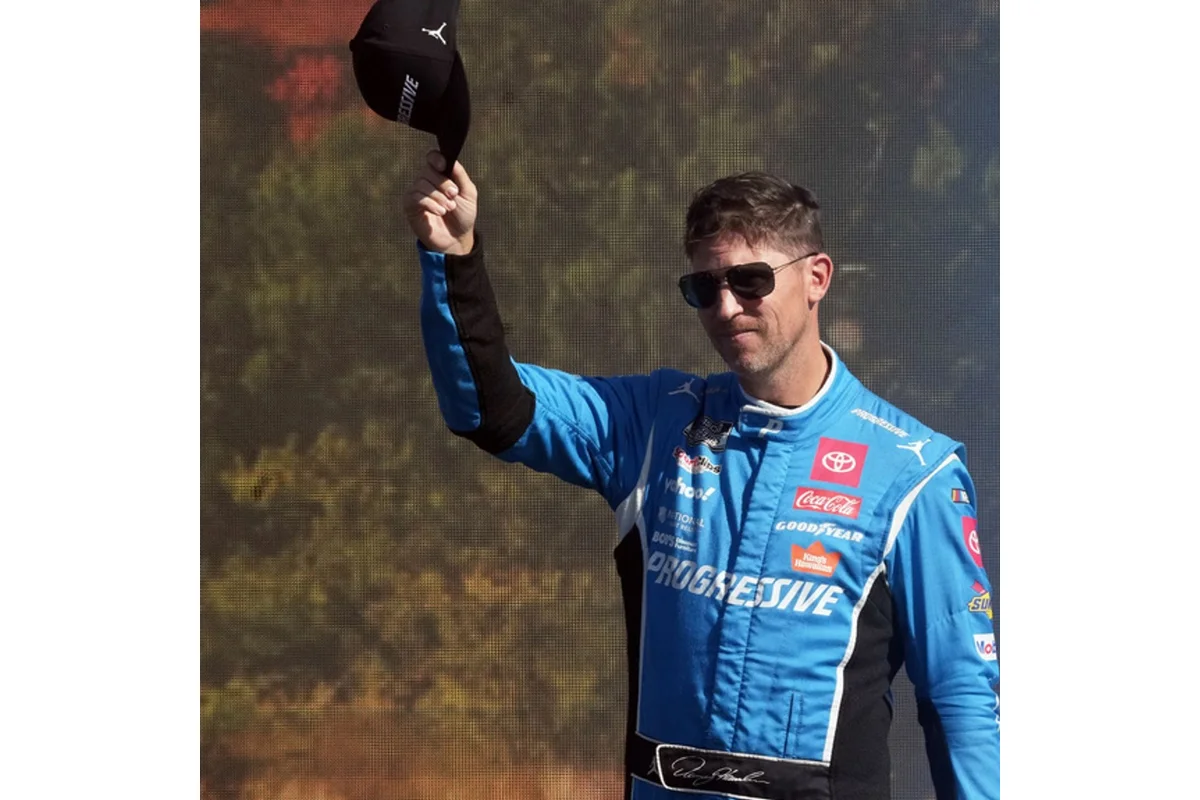
The unveiling generated significant discussion throughout both the garage and among fans, raising questions about whether an environmentally friendly trajectory is the right move for a sport deeply rooted in its tradition of sound, power, and mechanical spectacle. Denny Hamlin on NASCAR EVs became a central talking point, with the driver openly addressing uncertainties and resistance.
Denny Hamlin Raises Concerns About Fan Reception
In a conversation on the Digital Social Hour hosted by Sean Kelly, Denny Hamlin spoke candidly about how NASCAR’s core audience—longtime followers and newer fans alike—might react to electric cars entering the scene. Hamlin stressed the emotional connection many fans attach to the familiar roar of combustion engines, stating,
“I think the NASCAR fans will be very apprehensive to embrace that. I think that NASCAR fans are the ones that have been around for a very long time and even the new ones. And I think even consumers themselves in street cars like to hear sound 100%.”
– Denny Hamlin, NASCAR Driver
Hamlin’s comments underscored that the skepticism does not stop at racetracks; it extends through American driving culture at large. He noted that while enthusiasm around electric vehicles once surged, some drivers are now reevaluating the financial benefits and struggling to separate driving enjoyment from the integral sound of a powerful engine.
Technical Barriers and the Challenge of Endurance
Addressing the practicalities of electric racing, Hamlin highlighted the ongoing challenge of fitting race events into shorter broadcast windows, an initiative NASCAR has increasingly prioritized. He questioned whether electric platforms can deliver sustained, high-powered performance over the extended periods typical of current races, asking,
“Can you make a car make ample amount of energy, you know, 1,000 horsepower for 3 and 1/2 hour? I don’t think so.”
– Denny Hamlin, NASCAR Driver
While Hamlin acknowledged there could be opportunities for electric cars in special formats or exhibition races, he expressed doubts that mainstream fans would be quick to accept quieter, battery-powered machines in place of the sport’s signature V8 thunder.
EV Prototype Details and Industry Collaboration
The creation of NASCAR’s electric prototype stems from cooperation between the organization’s engineering team and leading OEMs such as Chevrolet, Toyota, and Ford, with technical assistance from ABB. The resulting vehicle is powered by a tri-motor, all-wheel-drive system, including one front and two rear motors, offering an impressive combined output exceeding 1,340 horsepower—more than what today’s Cup Series cars deliver.
Despite these advancements in acceleration capabilities, NASCAR has made it clear there are no plans to introduce an all-electric series or abandon combustion-engine competition in the Cup Series any time soon. Officials have reaffirmed that the familiar, powerful sound remains at the heart of NASCAR’s identity, echoing the sentiments voiced by Hamlin and reflected by early fan reactions to the electric concept.
NASCAR’s Next Steps: Balancing Innovation and Tradition
NASCAR faces a formidable task: integrating modern, sustainable technologies while maintaining the energetic atmosphere that draws spectators to the sport. With some consumers, engineers, and drivers invested in the conversation, and organizations such as Chevrolet, Ford, Toyota, and ABB working behind the scenes, the path forward remains uncertain. As the discussion continues, it’s clear that, for many, the combination of speed and sound defines the NASCAR experience—and convincing fans to embrace silent speed may test the sport’s ability to evolve without losing its identity.