Rick Hendrick’s recent on-air NASCAR apology to Richard Petty has resurfaced a decades-old moment from racing history, capturing the attention of fans and motorsport insiders alike. This public address, centered on Hendrick’s memorable misjudgment at Riverside International Raceway, highlights the enduring complexity of competition and respect in the sport.
A Racing Mistake That Lingered for Decades
Before he became known as a pillar of NASCAR ownership, Rick Hendrick pursued his own ambitions behind the wheel, attempting to make his mark in ARCA, the Truck Series, the Busch Series, and the pinnacle Cup Series. In those early years, he encountered a grueling learning curve familiar to aspiring drivers. While most of his time in the cockpit has faded into relative obscurity, one particular incident during the 1988 Budweiser 400 at Riverside International Raceway long haunted Hendrick’s memory. This episode involved none other than “The King” himself, Richard Petty—a defining personality in the sport and an icon to fans across generations.
Reflecting on this experience during a candid discussion with Dale Earnhardt Jr., Hendrick finally brought his long-held regret into the public sphere. Describing the fateful moment on the track, Hendrick explained how he found himself unexpectedly leading after a mid-race pit shuffle, entering unfamiliar territory on one of NASCAR’s most demanding road circuits. Under pressure during a late-race restart, Petty attempted a move beneath Hendrick heading into Turn 9. Lacking experience with the intricacies of Cup Series road racing, Hendrick failed to yield the necessary space, resulting in Petty spinning out across the dirt runoff area—a highly unusual outcome for a driver of Petty’s caliber.
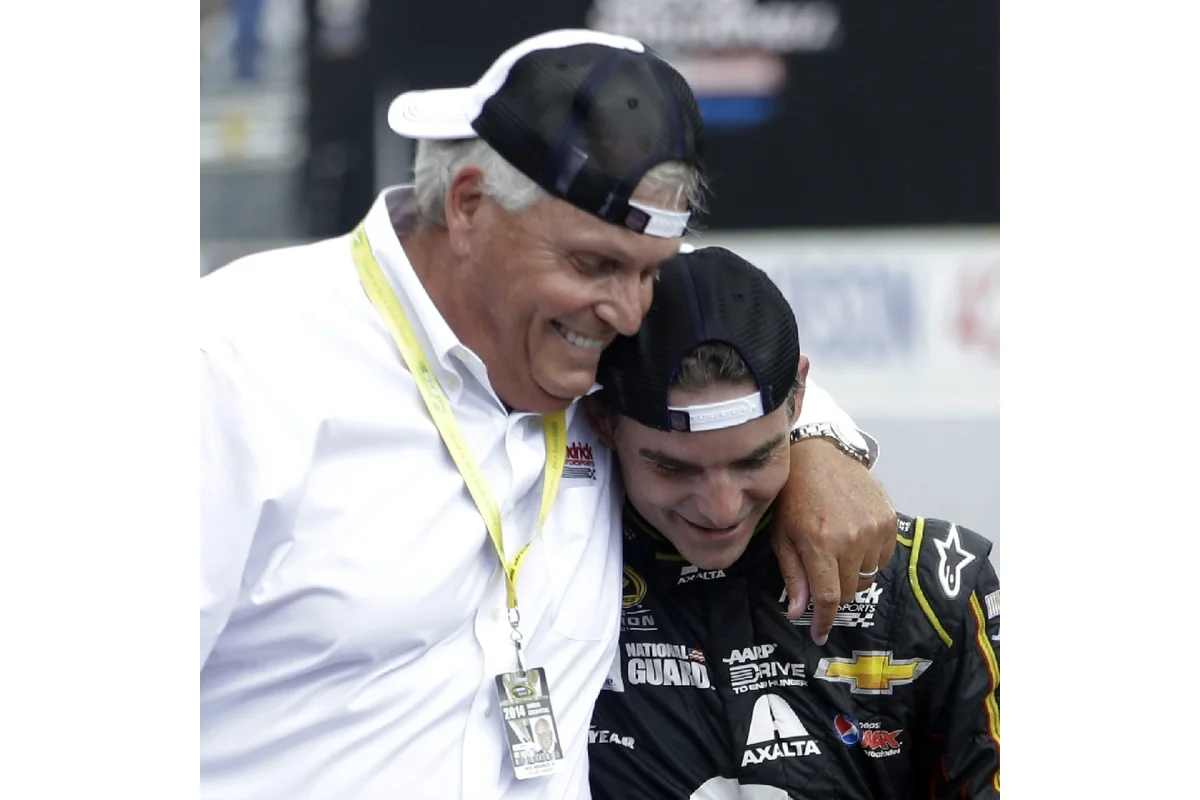
This event, though years in the past, remained fresh in Hendrick’s conscience. As he spoke with Earnhardt Jr., Hendrick addressed his apology directly to Petty in the hope it might finally clear the air:
“I didn’t give Richard room and I looked in the mirror and he was doing donuts through the parking lot. I haven’t told him. I don’t know if he remembers that or not. Richard, I’m sorry. I really am,”
—Rick Hendrick, team owner
The Historic 1988 Budweiser 400 Race Unfolds
The 1988 Budweiser 400 marked an important closing chapter for both Riverside International Raceway and NASCAR’s legacy on the West Coast. Hendrick, having qualified mid-field, found himself at the head of the field during the event’s critical late stages—thanks to pit strategy, rather than outright speed. The restart on June 12 brought Richard Petty quickly back into contention, and as the field bunched up, Petty made his approach toward Hendrick as they exited Turn 9.
Hendrick’s inexperience in this high-stakes situation led to an unintentional squeeze on Petty, forcing “The King” off course and into an unplanned dirt-spin. The incident was not only jarring but also emotionally significant, considering the reverence Hendrick held for Petty. Fans who witnessed the race recall how unusual it was to see Petty, typically a model of precision, spinning after contact with an up-and-coming driver.
Hendrick’s lighthearted yet sincere attempt to further the apology went out to anyone who might bring the message to Petty himself:
“If Richard Petty sees this, just know Mr. H is sorry. 😂🤷♂️”
—Rick Hendrick, team owner. The moment, broadcast on Dirty Mo Media and widely shared via social channels, resonated with fans for its candor and humility.
Riverside’s Final NASCAR Chapter and Hendrick’s Beginnings
Beyond the personal aspect of the apology, the 1988 Budweiser 400 marked Riverside’s swan song as a fixture on the NASCAR Cup Series calendar. Rusty Wallace secured victory at the historic track’s final Cup race, closing out a venue known for its technical challenge and thrilling finishes. While Wallace’s win was the record highlight, Hendrick’s experience added another layer of emotional depth to the event.
Long before establishing Hendrick Motorsports as NASCAR’s most successful team, Rick Hendrick forged his understanding of the sport in hands-on roles such as serving as a pit crew member for the celebrated Flying 11 car, piloted by Ray Hendrick (to whom he is not related). These formative years working trackside helped lay the groundwork for the championship dynasty he would build later in his career.
Hendrick Motorsports has since achieved an unparalleled record, with 383 total wins, 320 of them in the Cup Series, and claiming 15 Cup championships—the latest coming in 2025 with Kyle Larson’s second title. Despite all of these accolades and the stature he commands today, Hendrick’s willingness to revisit his early mistakes underscores the humility and reflection that persist among even the sport’s elite figures.
The Impact of an On-Air Apology in the NASCAR Community
Rick Hendrick’s public acknowledgment and apology have struck a chord among fans, drivers, and NASCAR historians. Owning up to a personal lapse in judgment in the presence of figures like Dale Earnhardt Jr. further highlighted the culture of accountability and mutual respect that defines the sport’s upper echelons. While Petty has yet to publicly address the moment or respond, the story has reignited conversations about the pressures faced by drivers as they learn and evolve within NASCAR’s competitive environment.
Reactions have also drawn attention to how lessons learned from the past can influence future interactions and on-track decisions. Hendrick’s open candor serves as a reminder to both younger drivers and veterans that racing is not only about technical excellence and winning but also about humility, growth, and the willingness to address the complicated emotions that define sporting careers.
Related NASCAR Developments and Stories
The NASCAR world remains dynamic, with other recent stories highlighting the triumphs and tribulations that shape the sport’s narrative. Among these, Greg Biffle’s decision to part with a cherished $4 million vehicle after a heartbreaking incident has deeply moved the racing community. Denny Hamlin’s emotional response following the loss of his father in a tragic fire has also drawn widespread empathy from fans and colleagues. The passing of Michael Printup, the former head of Watkins Glen, at age 60, and ongoing debates about youth competition standards in motorsports continue to fuel passionate discussions across the sport.
Elsewhere, business moves—such as the France family’s rival competitor acquiring another historic Kansas track—signal ongoing changes to NASCAR’s landscape and legacy, affecting fans and future generations of drivers alike.
Hendrick Motorsports Strives for a New Season Edge
Looking ahead, optimism pervades the Hendrick Motorsports operation as they embark on the new NASCAR season. Jeff Gordon, now vice chairman of the team, has cited technical updates—especially Chevrolet’s revised Cup Series body style—as a major factor in renewing competition with top rivals. The 2025 Cup-winning car driven by Kyle Larson showcased these upgrades, incorporating design tweaks like a taller hood dome, a reimagined grille, and aerodynamic features borrowed from high-performance street models.
Gordon expressed his perspective on the team’s prospects, saying,
“When you’ve done what we’ve done with our car and our teams, and one of those things is winning a lot of races and winning a championship, I get really excited when I think we’ve got something that’s an upgrade. I don’t want to get too caught up in that because sometimes, it takes time to fine-tune that change,”
—Jeff Gordon, vice chairman. He remains confident that the latest Chevrolet developments will help Hendrick Motorsports regain, if not surpass, parity with their fiercest competitors. As Gordon concluded,
“I feel like we’ve gotten ourselves on a level playing field with them, so I’m very excited about that,”
—Jeff Gordon, vice chairman.
The upcoming season’s opener at Bowman Gray Stadium will provide an early litmus test for the effectiveness of these changes, especially in the technical Cook Out Clash race where even small improvements often yield significant results.
Enduring Lessons and Lasting Legacies
Rick Hendrick’s NASCAR apology to Richard Petty serves as an evocative reminder of the profound personal and professional stakes that accompany life on the track. The incident at Riverside and the willingness to revisit it decades later not only reflect Hendrick’s personal growth but also shed light on the evolving standards of sportsmanship within the NASCAR community.
In a sport defined by its intensity, complexity, and relentless pursuit of excellence, moments of vulnerability and amends can resonate as powerfully as any championship. As NASCAR continues to write new chapters through its leading figures, teams, and tragic as well as triumphant events, stories like Hendrick’s apology promise to remain an integral part of the fabric that unites fans and competitors alike across all generations of racing.
If Richard Petty sees this, just know Mr. H is sorry. 😂🤷♂️
🎙️ From The @DaleJr Download pic.twitter.com/0rnIIBlj7y
— Dirty Mo Media (@DirtyMoMedia) January 1, 2026