
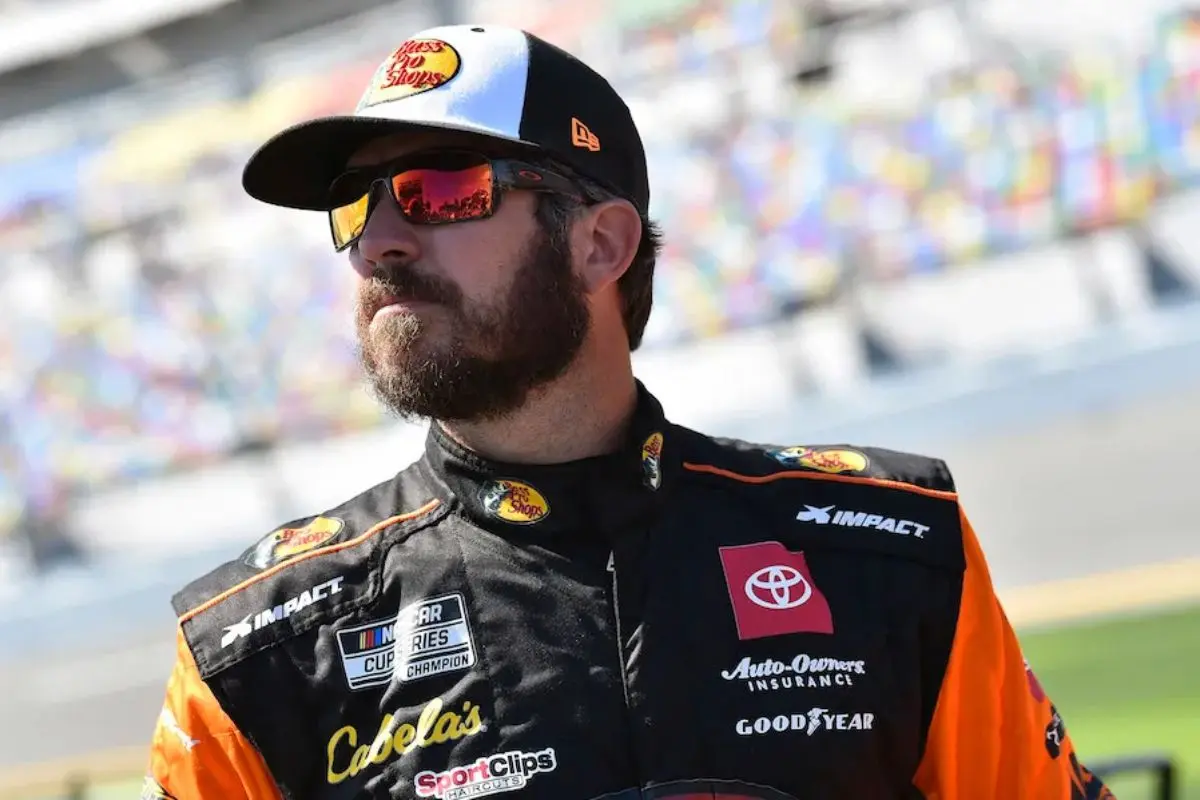
Martin Truex Jr. admits he tried music during a race, but it didn’t go as planned. In the fast-paced world of NASCAR, distractions can lead to disaster, and Martin Truex Jr. quickly learned that even the simplest things could break his focus. What seemed like a fun experiment turned into a wake-up call about the importance of staying in tune with the track and the car.
Key Highlights
- Martin Truex Jr. attempted to listen to music during a test session in 2015.
- The music proved to be profoundly distracting and disorienting for Truex.
- It drowned out crucial feedback from the race car’s noise, impacting performance.
- Truex’s experience emphasized the need for drivers to stay attuned to vehicle feedback.
- The experiment highlighted the necessity of undivided focus in NASCAR racing.
The Demands of NASCAR Racing and the Absence of Distractions
In the world of NASCAR racing, the demands placed on drivers are nothing short of extraordinary, as they must maintain steadfast concentration for hours on end. The repetitive nature of the sport, where drivers navigate circuits for as many as 500 laps over the course of 3-4 hours, can often verge on the monotonous. Yet, the absence of distractions becomes an essential aspect of their success.
Unlike the casual road trip where music and snacks provide a welcome reprieve, NASCAR drivers are bound by a different set of rules. The inherent risks of racing at speeds exceeding 200 miles per hour necessitate an environment that is devoid of such diversions.
Communication is limited to tactical dialogues with the crew chief and spotter, facilitated through radio transmissions. These interactions are crucial for safety and performance, providing guidance and real-time updates on track conditions and competitor strategies.
However, the mental endurance required to maintain focus in this high-stakes environment is substantial. The drivers must possess not only physical agility but also psychological resilience, a combination that allows them to process information swiftly while maintaining unerring control over their vehicles.
Every decision, every maneuver at these blistering speeds, must be executed with precision. The absence of music or other distractions is not merely a rule; it is an acknowledgment of the razor-thin margin for error that defines the sport.
This disciplined focus guarantees that drivers remain acutely aware of their surroundings, a necessity in a world where a split-second lapse in concentration can have dire consequences.

Martin Truex Jr.’s Experience with Music While Racing
The appeal of music as a companion during mundane moments sharply contrasts with the focused solitude required by NASCAR drivers. Martin Truex Jr., a prominent figure in the racing world, experienced this firsthand. In a 2015 interview, he candidly shared a rare experiment during a seemingly interminable testing session. The monotony prompted him to try listening to music via an mp3 player while on the track.
However, this attempt at alleviating tedium quickly unraveled into a lesson on the importance of unbroken concentration. Truex described the experience as profoundly distracting, likening it to being in “outer space.” The music, far from enhancing his focus, created an unsettling sense of detachment.
“One time when we were down somewhere testing and it was really boring for a couple of days, I tried listening to a little mp3 player. And it was so distracting! When you’d go on the racetrack with that thing playing, it was like you were in outer space. So you’d just have to turn it off.” – Martin Truex Jr.
The relentless noise of the race car, typically a crucial source of feedback for drivers, was drowned out, leaving him feeling disoriented and disconnected from his vehicle. This disconnect highlighted the necessity for drivers to be acutely attuned to every nuance of their car’s performance.
“It was fine in the garage, but when you were on the racetrack, it was drowning out the noise of the race car and you just couldn’t hear it. It felt like you were completely disconnected from the car.” – Martin Truex Jr.
The contrast between the seemingly benign presence of music in everyday life and its intrusive nature on the racetrack was pronounced. Truex’s anecdote serves as a compelling reminder of the unique demands of NASCAR, where immersion in the race environment is paramount.
For Truex, the experiment was a valuable, albeit brief, exploration into personal limits and the realization that some distractions, regardless of their usual comfort, have no place in the high-stakes world of professional racing. It is a reflection of the intense focus and discipline required to excel in this demanding sport.
NASCAR’s Regulations and Safety Measures
Martin Truex Jr.’s brief experiment with music on the racetrack highlights the rigorous requirements of NASCAR‘s racing environment. While consumer vehicles from brands such as Chevrolet, Ford, and Toyota feature luxury components like premium audio systems, NASCAR race cars are engineered with a singular focus on performance and safety. These vehicles are stripped of non-critical components, such as side-view mirrors, air conditioning, and horns, to guarantee drivers maintain utmost concentration and adhere to stringent safety protocols.
One pivotal regulation enforced by NASCAR is the prohibition of personal music devices during races. This rule emphasizes the importance of maintaining an undivided focus on the track, safeguarding not only the driver but also the 39 other competitors racing in close proximity. The high-speed nature of NASCAR events demands acute awareness of every movement and sound, from the hum of engines to the screech of tires, which can signal critical developments on the track.
The absence of music isn’t a matter of personal preference or comfort; it is a deliberate safety measure. In a sport where split-second decisions can alter outcomes or prevent accidents, any distraction can be detrimental. This regulation is emblematic of NASCAR’s commitment to prioritizing safety over convenience.
Truex Jr.’s realization of the impracticality of music in such a dynamic and demanding environment exemplifies the discipline required by drivers who must constantly balance speed with safety. NASCAR’s restrictions are not mere guidelines but crucial components of a high-stakes sport that commands precision, focus, and respect for the rules.

Brad Keselowski’s Thoughts on Music While Racing
Reflecting on the unique dynamics of NASCAR racing, Brad Keselowski shared his contemplative experience with the idea of music in the car. During an insightful interview with Jeff Gluck, Keselowski recounted his early days at Daytona with JR Motorsports, where he was introduced to specialized earplugs by none other than Dale Earnhardt Jr. The notion of interweaving music into the high-octane environment of racing intrigued him momentarily. However, Keselowski’s practical sensibilities soon overtook this curiosity.
Keselowski pondered, “What would my team guys think if I was listening to music in the car because I was bored?” The thought of sending a potentially demoralizing message to his crew led him to retract from the idea. He concluded, “It felt like that would be really de-motivating to them and they’d feel like I didn’t care. So I’d feel too guilty.” His decision not to pursue music while racing speaks volumes about the relationship between a driver and their pit crew—a bond reliant on mutual respect and focus.
The advent of Gen-Z drivers may prompt new perspectives on this concept, yet Keselowski’s rationale remains rooted in an ethos of dedication. His story highlights the nuanced interplay between innovation and tradition, a hallmark of NASCAR’s enduring legacy.
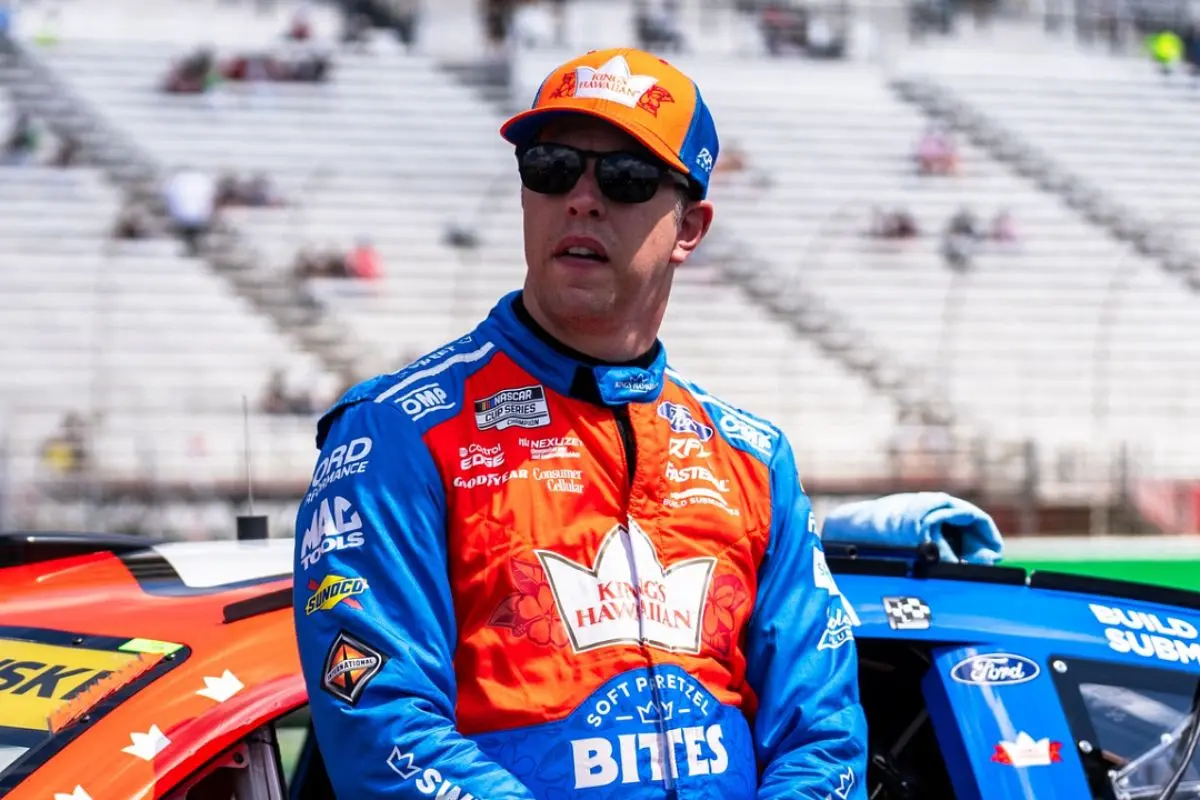
News in Brief: Martin Truex Jr. Admits He Tried Music
The exploration of integrating music into the high-stakes environment of NASCAR racing, as attempted by Martin Truex Jr., emphasizes the critical importance of minimizing distractions in a sport demanding intense focus and precision. NASCAR’s stringent regulations and emphasis on safety reflect a broader understanding of the potential risks involved. Insights from fellow racer Brad Keselowski further highlight the shared recognition within the racing community that undivided attention is paramount to ensuring both competitive performance and safety on the track.
ALSO READ: The Dominant Martin Truex Jr. Pulled Off His 2017 Championship Race Masterpiece!

